
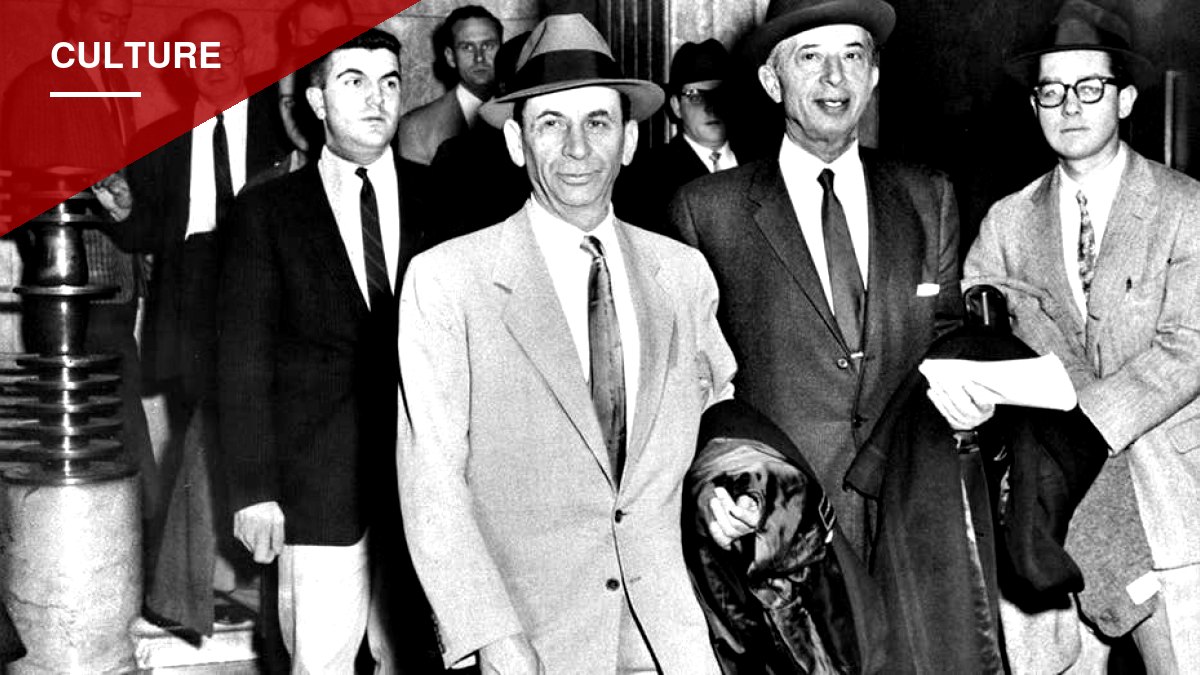

Meyer Lansky II remembers his grandfather not as the man historians call the architect of modern organized crime, but as a stern, careful presence who fussed over his grades and his manners. In a new book co-written with S. J. Peddie, “The Lansky Legacy: The Life and Letters of Meyer Lansky,” the younger Lansky draws on personal letters, photographs and memory to describe growing up as the namesake of the man widely known as the “mob’s accountant.”
“He never mentioned the names of anybody that he worked with. He was always cautious with that,” Lansky told Fox News Digital.
Lansky, who grew up in Washington state, said his grandfather kept his criminal dealings entirely separate from their relationship. Instead, the elder Lansky focused on lessons in presentation and character, right down to how to wear tie pins and use a shoehorn.
“Growing up in Washington state, I wasn’t exposed to those kinds of things anywhere else,” Lansky said. “He was always asking me about my grades, my studies and what books I was reading. He’d give me basic advice: ‘Whatever you do, do a good job. Be honest with people, provide good service and people will come back to you.'”
A founder of the modern mob
Meyer Lansky, born in Poland, rose to prominence in the early 20th century alongside childhood friends Benjamin “Bugsy” Siegel and Charles “Lucky” Luciano. The trio built gambling operations that stretched from Havana to Las Vegas, Nevada, helping to reshape organized crime into what became known as the modern American Mafia.
“He was right alongside Luciano and Bugsy Siegel during the transformation of the syndicate into the modern American Mafia,” Lansky said.
That notoriety came with danger. The grandson recalled a childhood incident in which his grandfather’s reputation and presumed wealth nearly led to his own kidnapping.
The moment the truth surfaced
As he got older, Lansky began to piece together who his grandfather really was.
“One day I was listening to the radio and heard that Treasury Secretary John Connally was going to Las Vegas to investigate Meyer Lansky,” he said, referring to the federal government’s long, ultimately unsuccessful effort to convict his grandfather. “When my grandfather visited a week later, I told him, ‘Hey, I heard your name on the radio.’ He looked at me, smiled, and said, ‘You did?’ He didn’t elaborate, but I knew at that point he realized I was going to figure out who he really was.”
The missing millions
Mob historians have long credited Meyer Lansky with pioneering modern money laundering and amassing vast, hidden wealth. But his grandson said the family never saw any sign of a fortune.
What remains, he said, is Lansky’s outsized imprint on American culture and on Las Vegas itself.
“He was heavily involved in transforming the American Mafia into something that still holds an irresistible, nostalgic grip on culture,” Lansky said. “These guys are major figures of history. They took a barren desert and turned it into a sophisticated gambling empire.”



You must be logged in to post a comment Login