
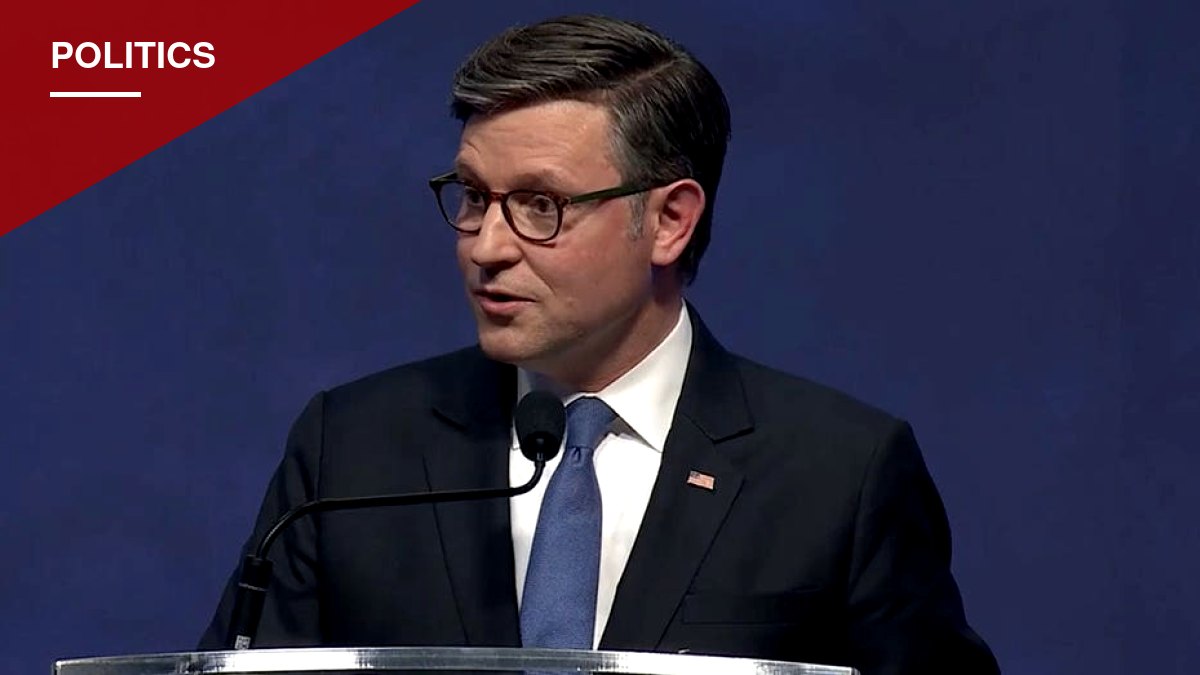

House Speaker Mike Johnson, R-La., said Sunday he opposes any emergency moratorium on artificial intelligence development, arguing that slowing American companies down would let China close the technology gap.
“We have to resist Congress jumping in and imposing some sort of emergency moratorium,” Johnson said on CNN’s “State of the Union.” “Here’s what I’m proposing: I think the leaders and providers of these platforms need to come together in a meeting with us and figure out what the right balance is. We cannot put a moratorium on this because China will overlap us.”
Johnson proposed bringing top AI executives together with policymakers, possibly at the White House, to hash out safety and national security concerns directly.
“We’ve got to summon everybody together. They probably should be summoned together at the White House. And I think we need to go in a big room, close the door and sort this out. And I’ll be the one pushing for it.”
His comments came as Republican National Committee member and Humans First chairwoman Amy Kremer pressed for targeted safeguards rather than a broad halt to AI development.
“We need guardrails that protect Americans while allowing American innovation to lead the world,” Kremer told Fox News Digital. “That means protecting children, workers and our national security, while making sure China doesn’t win the AI race.”
Kremer, a leading Republican critic of the rapid buildout of AI data centers, said Congress should not override state and local control over where such infrastructure gets built. Humans First, the grassroots conservative group she chairs, opposes blanket moratoriums on data centers but wants local governments to retain authority and rejects the use of eminent domain for such projects.
“When it comes to the massive data centers being built to power AI, Washington should not strip states and local communities of their authority,” Kremer said. “The people who live with these projects should have a voice in whether and where they’re built. They also have a right to know who that company is before decisions are made, not after the deal is done.”
Industry voices split on the pace of AI
The debate intensified after Anthropic CEO Dario Amodei called Saturday for slowing development of increasingly capable AI models, a position that drew backing from xAI founder Elon Musk and OpenAI CEO Sam Altman.
“We must slow the pace at which we improve the capabilities of AI models. Progress will still seem fast, and we must make wise use of the time we gain,” Amodei said.
President Trump rejected calls for a broader slowdown Sunday while speaking to reporters in Ireland, framing AI development as central to competition with China.
“We’re leading China on AI. We’re the most sophisticated country in the world and, frankly, I want to keep it that way, because whoever wins AI wins.”
Data centers and consumer costs
Public unease has also focused on the infrastructure needed to sustain AI’s growth. A July Fox News poll found 70% of registered voters opposed construction of AI data centers in their area, while 30% supported them.
The Trump administration has attempted to address electricity cost concerns through its Ratepayer Protection Pledge, which requires participating AI companies and data-center operators to cover power-generation and infrastructure costs rather than pass them on to customers. The White House says the pledge now covers roughly 80% of electricity delivered to American homes and businesses.
Kremer said consumer protections should go further than electricity rates alone.
“Americans shouldn’t be forced to subsidize Big Tech through higher electricity bills, tax giveaways, eminent domain or the loss of productive farmland,” she said.






You must be logged in to post a comment Login