

Clay Hayes turned a short, unadorned demonstration into a basic survival lesson about preserving meat without refrigeration, and it matters whether you understand it or not. He showed how simple techniques—drying, trimming fat, and using smoke—decide if an animal becomes food or a wasted carcass. This article follows his example and explains practical methods, the risks of failure, and why that old skill still matters today.
Hayes is a hunter and bowyer who won a long survival contest on a remote lake, and his short video on preserving meat has resonated because it strips the drama away and keeps the work. He speaks plainly from experience: when you kill something, time starts ticking on whether it feeds you or feeds microbes. The urgency is practical, not aesthetic, and his approach treats meat as a resource with a deadline.
There is a famous counterexample to Hayes’s lesson in the story of a young man who wandered into the bush with high ideals and few practical skills. He brought rhetoric and romance but not the competence needed to turn a kill into lasting food, and the consequence was predictable and cruel. That contrast is the point: sentiment does not substitute for method.
Meat spoilage is caused primarily by microbial activity or bacterial growth. And so the key to preserving meat without refrigeration is to simply get that meat dry enough so that those microbes can’t grow.
That paragraph is the technical core and it is worth repeating exactly because the rest follows from it. Dry the meat and you deny bacteria the water they need to multiply; fail and you hand your harvest to decomposers. Every step after the shot should be judged by whether it helps moisture leave the flesh.
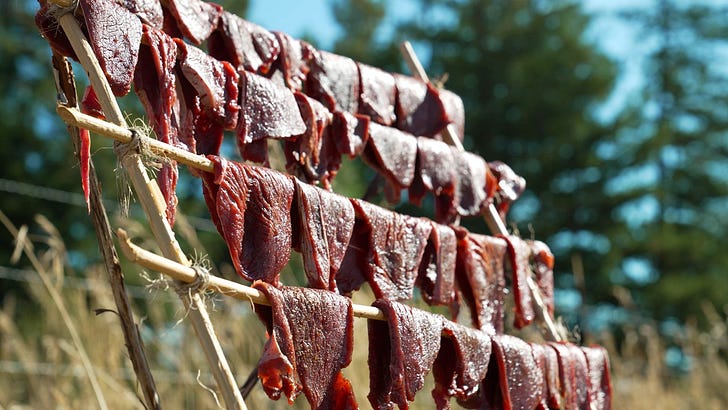
When conditions are warm, dry, and breezy, sun drying is shockingly effective and straightforward. Slice lean cuts into quarter-inch strips or thinner, flatten them so air can reach every surface, and hang them on racks of sticks to circulate air. Flip the strips when a dry rind forms and collect them into sacks once they’re stiff; salt improves taste but is not strictly necessary for safety.
Fat is the enemy of long-term drying because it refuses to lose moisture and turns rancid faster than lean tissue spoils. Trim any fatty edges before you hang meat to dry, and if you want the calories later, render the fat separately into tallow when you can. Properly rendered fat can store far longer than untrimmed strips and lets you turn a kill into multiple reliable calories.
When the weather is cool and damp, slow smoking becomes the alternative and requires patience and small flames. Build a low smoker, maintain a slow smolder with green or punky wood for steady smoke, and avoid resinous coniferous wood that will taint flavor. Move slowly: rushed heat forms a hard exterior around a moist core, which only delays putrefaction rather than preventing it.
Pests will show up to any drying operation, and the usual offenders are flies and yellow jackets that peck at exposed surfaces. Clean slicing and careful handling reduce contamination, and smoke or a small fire will discourage many insects. If a wildfire or ban prevents smoking, your remaining options are vigilant flipping and early storage in a dry sack before nightfall.
Preserved meat is versatile; it is not meant to be eaten like jerky every meal but to be a durable ingredient that rehydrates. Hayes demonstrated cooking dried strips with other local ingredients to restore texture and flavor, proving dried meat can be both survival food and real food. The trick is to treat drying as triage when you have a surplus, and as a pantry item later on.
Relying on refrigeration and distant supply chains is a modern convenience that hides brittle fragility in logistics and politics. Supermarkets, cold storage, and long-haul transport create the illusion of endless abundance, but local pipelines hold only a few days of food at a time before breakdowns cascade. Learning to preserve what you can harvest puts some control back where it belongs.
Hayes didn’t hunt to prove he was rugged; he practiced because skill turned a kill into living. The wilderness does not reward noble intentions, it rewards competence, and preserving meat is one of those plain, useful competencies. Learn it before you need it, because the lesson arrives at its own timetable and the animals do not wait for a lecture or a trend piece.






You must be logged in to post a comment Login