
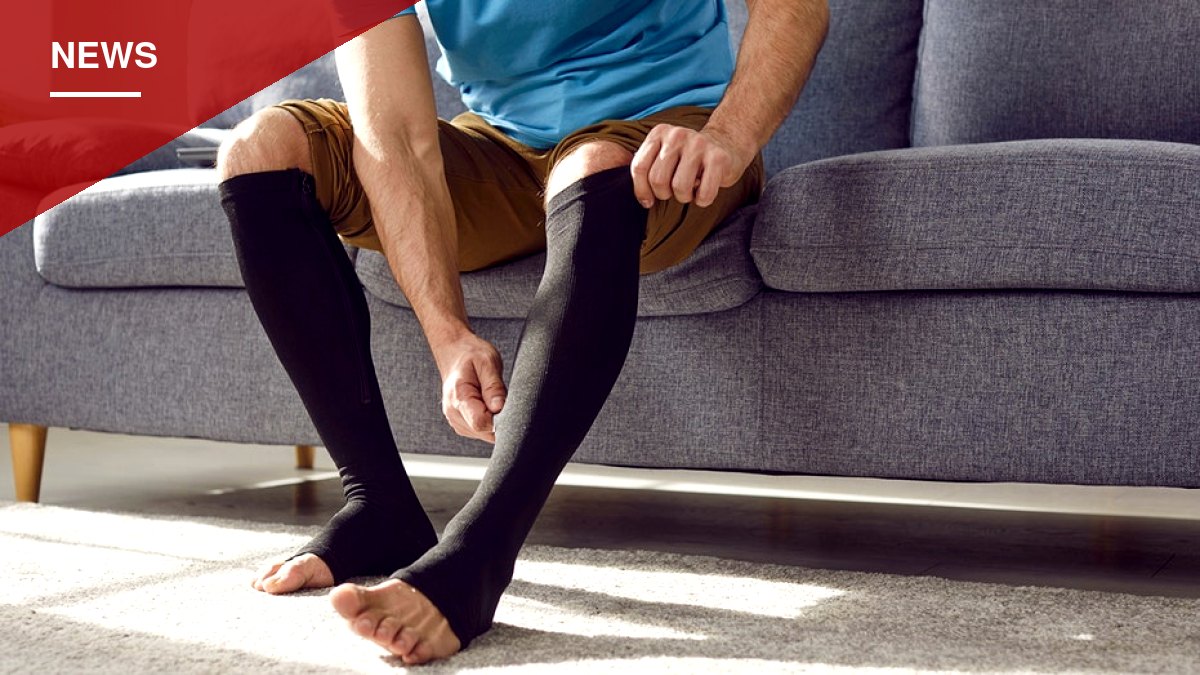

For anyone who spends the day sitting at a desk, standing behind a counter or flying across the country, doctors say compression socks can offer real relief from swelling, aching and that heavy feeling in the legs.
Dr. Anne Sharkey, a board-certified podiatrist based in Austin, Texas, explains that inactivity, prolonged sitting or standing for long stretches can cause blood to pool in the lower legs. That pooling leads to swelling and discomfort. Compression socks address the problem by applying external pressure to the lower legs, which helps push blood back toward the heart and reduces pooling in the legs, feet and ankles.
Dr. Samantha Landau, a professor at Touro New York College of Podiatric Medicine, says the legs normally rely on muscle contractions to pump blood back to the heart. But age, genetics, excess pressure on the legs or a lack of activity can weaken the valves that keep that system working. She says compression socks can relieve pain and lower the risk of blood clots.
How Much Compression Do You Need?
Experts say the strength of compression matters more than the brand name on the package. Socks rated 15–20 mmHg deliver moderate pressure suited to everyday wear, while 20–30 mmHg socks apply firmer, more restrictive pressure that may be better for managing pain.
Who benefits most? Doctors point to a wide range of people: passengers on long flights, flight attendants, nurses, office workers, pregnant and postpartum women dealing with swelling, and athletes using compression for recovery. People with chronic leg pain, those who are bedridden and wheelchair users may also benefit, depending on their individual health needs.
What The Experts Recommend
Sigvaris’ sheer compression socks are frequently used by patients with medical conditions. Rizwan Tai, a podiatrist and podiatric surgeon at Vital Podiatry in Houston, says the brand has






You must be logged in to post a comment Login