
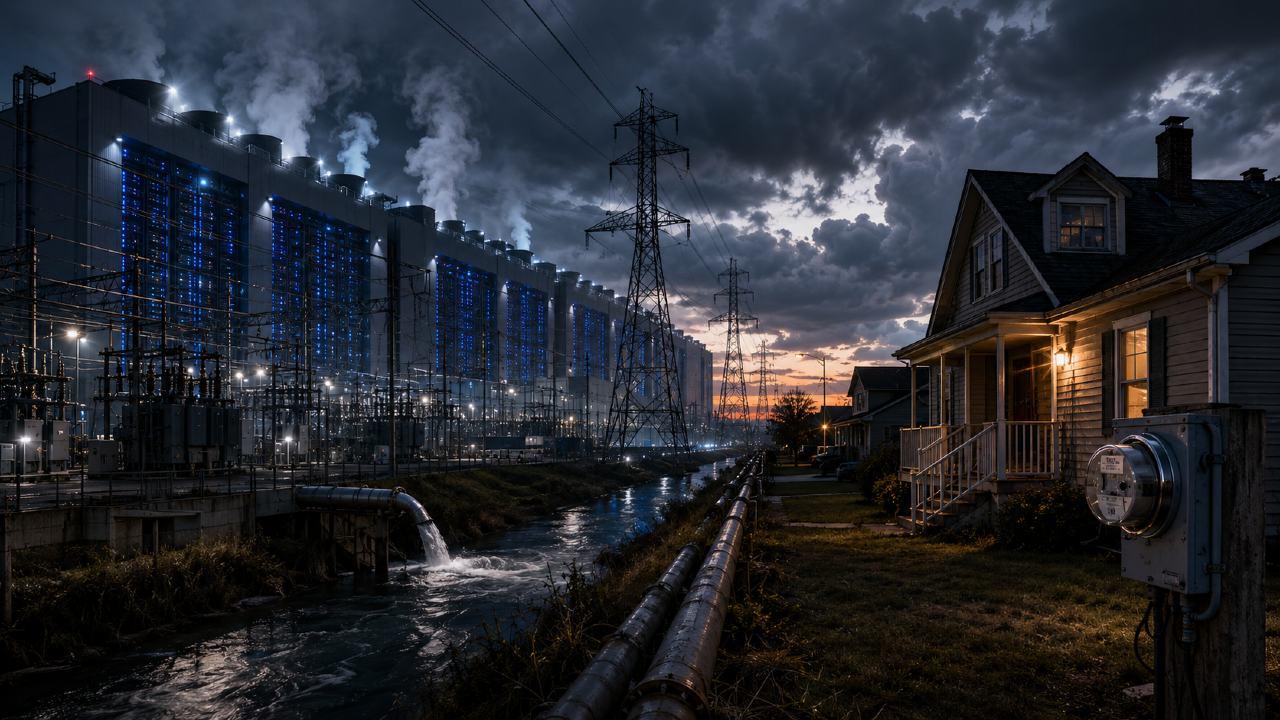

Data centers that power chatbots are not just clever software; they are a massive physical industry that is reshaping electricity use, water demand, and the stability of the grid. This piece lays out the scale of that buildout, the costs falling on households, the strain on water and transmission systems, and practical steps families can take now. It keeps the math and the tradeoffs front and center and points to the timeline mismatch between demand and the infrastructure meant to support it. You do not need technical expertise to understand the risks or to act on them.
Those lightweight answers floating across your screen hide a huge physical footprint. There are thousands of data centers across the country, and collectively they already consume a meaningful share of national electricity, with more facilities under construction every month. The industry’s appetite for power is real, measurable, and growing fast.
Right now, the sector accounts for a significant slice of U.S. electricity consumption and analysts warn that slice could expand dramatically over a short period. Projections suggest data centers might consume a much larger share of national power within a few years, and federal energy agencies are tracking total electricity use at historic highs. In regions where the buildout is concentrated, a single county’s data centers can use more power than every home in that county combined.
The cost of that growth shows up on household bills. Recent years have seen substantial rate increases tied to growing demand, and average prices climbed noticeably in a single year. Anecdotes from affected regions show bills jumping by hundreds of dollars, signaling that what looks like a tech success story at the corporate level can feel like sticker shock at the kitchen table.
Water is another hard limit most people do not see. Cooling massive server farms already required billions of gallons in a single year, and estimates suggest the industry could need hundreds of millions to over a billion gallons per day of additional water capacity by the end of the decade. That demand lands hardest on small towns and rural systems that can be stressed by sudden, large users.
For which of you, intending to build a tower, sitteth not down first, and counteth the cost, whether he have sufficient to finish it? (Luke 14:28)
The biblical question about counting the cost fits neatly here because the modern builders moved at a different pace than the utilities and regulators. Forecasts show demand from hyperscale facilities rising sharply in just a few years, while the new power plants and transmission lines to serve them exist mostly on paper. That gap between projected demand and physical delivery is the central mismatch everyone should worry about.
Permitting a large power plant takes years and building transmission can take even longer, while training an advanced model and bringing a data center online can happen in months. That timing mismatch leaves the strain to be absorbed by the existing grid, which in many places was already aging and operating with little margin for error. When the grid runs at the edge of capacity it has no room for the unexpected weather event or equipment failure that used to be handled quietly.
To their credit, some companies are signing long-term energy deals, exploring liquid cooling that reduces direct water use, and investing in new generation capacity. Those moves are positive but they are multi-year projects that don’t erase the short-term crunch. The reality is the interim period between rapid data center expansion and completed infrastructure is when households and communities feel the pressure most acutely.
Households do not need to panic, but they do need to adjust expectations and plans. Assess your exposure to rising energy costs and consider practical measures to reduce the impact of outages and higher bills. When a large facility is proposed nearby, residents should participate in hearings and ask concrete questions about who pays for upgrades and how local water resources will be protected.
- Plan for higher electricity costs in your household budget rather than assuming rates will stay flat.
- Treat grid reliability as a practical planning factor and consider backup options proportionate to your needs.
- Engage locally when large facilities are proposed and demand clear commitments on infrastructure costs and water impacts.
The AI economy treats the grid like raw material, drawing down power and water as it grows, and the least communities can do is count the cost before the towers rise. That kind of sober, early attention gives ordinary people a fighting chance to protect their bills, their wells, and their access to reliable power.






You must be logged in to post a comment Login