
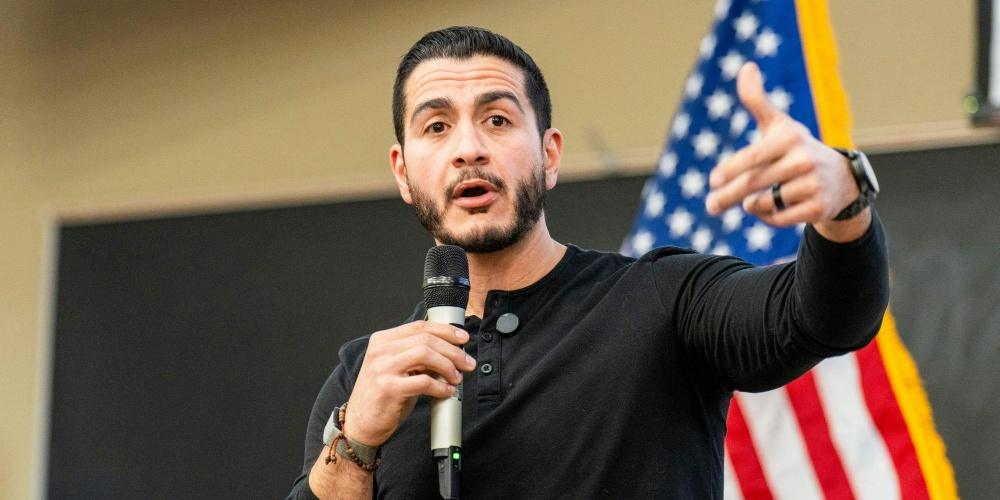

The fight for control of the U.S. Senate is now set, and five states will decide whether Republicans keep their majority or hand the gavel to Chuck Schumer, with several Democratic primaries delivering nominees from Bernie Sanders’ wing that reshape the map and the choices voters will face this fall.
With the full lineup locked in, the contest is less about individual polls and more about the direction both parties chose. Democrats repeatedly nominated insurgent, progressive candidates in key states, a trend that forces voters to decide between a continued shift left and a conservative check in Washington. For Republicans, the task is to turn that trend into a clear argument that persuades swing voters to protect the Senate majority.
North Carolina offers a classic contrast: a long-time Democratic governor versus a Republican who helped run the 2024 victory machine. Money is pouring in on the GOP side to introduce the candidate to voters and counter a familiar statewide figure. The state’s history and its recent voting patterns give Republicans a real shot if they can frame the choice around experience and public safety.
Alaska has become a contest built on chaos and confusion, with two candidates sharing the same name on the ballot and voters left to untangle who stands for what. The incumbent Republican faces a former Democrat who is strong on fundraising and ranked-choice strategy, and the presence of another similarly named filer injected uncertainty that moved the race into toss-up territory. If Democrats profit from the ballot scramble, a reliably red seat could flip because of name recognition and second-choice voting.
Maine is a test of political identity for a famously independent state. After an insurgent progressive collapsed amid scandal, the party selected another Sanders-style populist to take the nomination, setting up a confrontation with a senator who has a long record of doing things her own way. That dynamic forces Mainers to weigh familiarity and independence against a clear leftward agenda that promises sweeping changes to health care and taxes.
Michigan completed the map with a nomination that sent shockwaves through the Democratic establishment. A progressive activist who openly calls the Gaza conflict a genocide and would be the first Muslim senator in American history squeaked past the establishment-backed contender. The general election will test whether that kind of nominee mobilizes the left or alienates moderate and suburban voters who decided the last few cycles.
Republican strategists see the Michigan outcome as a gift. “Abdul El-Sayed’s victory marks another devastating loss for Chuck Schumer in his civil war with Bernie Sanders as Democrats position Mike Rogers to defeat socialism’s newest standard-bearer in November,” National Republican Senatorial Committee spokeswoman Bernadette Breslin told Fox News Digital. That framing will shape ads, messaging, and fundraising as the fall campaign begins in earnest.
Ohio’s special election is a rematch of recent political wounds, with a veteran Democrat returning to try to reclaim a seat he lost just two years ago against a freshly appointed Republican. Voter memory and shifting state trends matter here: Ohio has moved rightward in recent cycles, and a special election that fills the remainder of a term raises the stakes for immediate turnout. The race will hinge on whether the Democrat can expand beyond his base in a state that has shown impatience with career politicians.
Across these battlegrounds, a pattern emerges: Democratic primaries repeatedly rewarded the party’s left flank, producing nominees comfortable with expansive government programs and confrontational rhetoric. That direction complicates the party’s general election case in swing states where voters prize moderation and practical problem solving. Republicans will press the argument that handing the Senate to a caucus dominated by activists threatens economic stability and national security.
Money and muscle matter now more than ever, with massive outside spending already committed to key races and national groups on both sides framing the stakes in stark terms. Republicans control the chamber by a narrow margin, so defending the majority requires holding even one or two competitive contests that could otherwise tip the balance. The next three months will be a test of messaging discipline and grassroots turnout.
There is also a moral warning woven through these developments, a reminder of unintended consequences when a party cultivates its most extreme elements. As the prophet wrote, “For they have sown the wind, and they shall reap the whirlwind” (Hosea 8:7). Democrats planted a radical approach that now threatens to determine who leads the Senate this fall, and voters in five states will decide if that harvest is what they want to reap.




You must be logged in to post a comment Login