
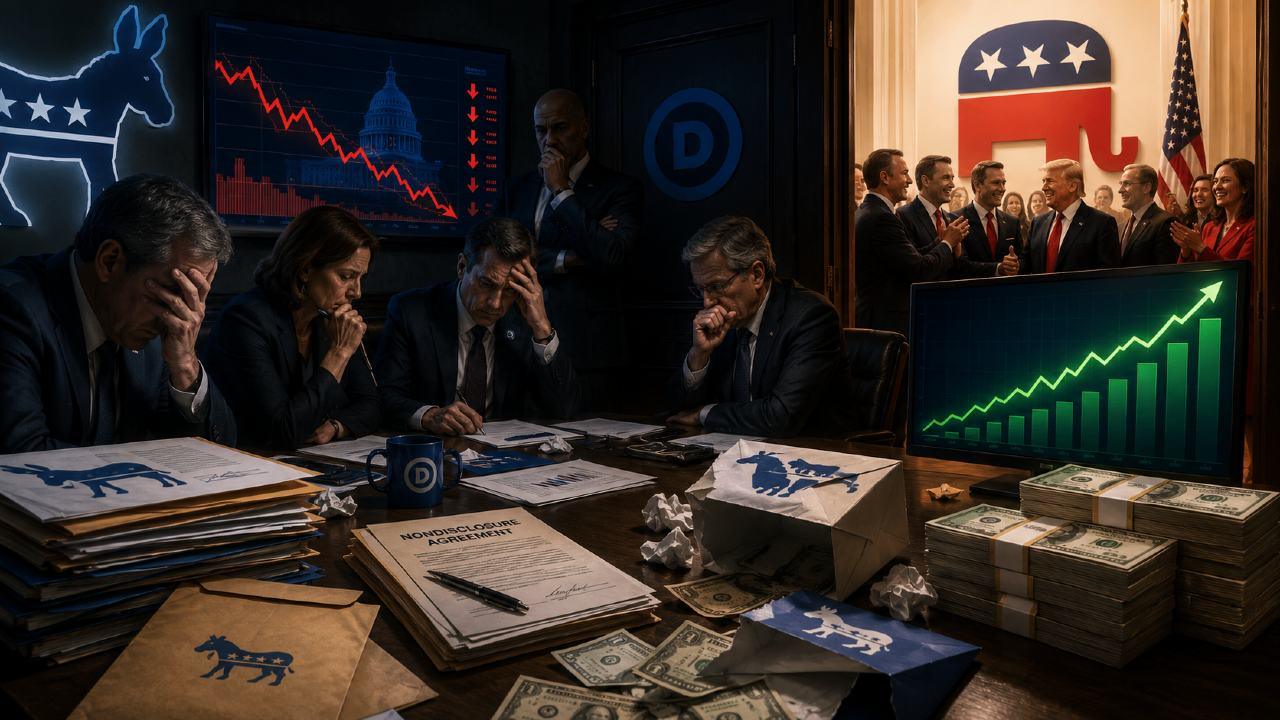

The Democratic National Committee quietly forced senior officers to sign nondisclosure agreements before a closed meeting about its shaky finances, a move that speaks louder than press statements about the party’s ability to compete in 2026. This article examines the NDAs, the DNC’s books, leadership questions, the strategic advantage Republicans now hold, and the deeper political choices that led to this moment.
News that high-level DNC officials were asked to keep a serious funding discussion secret is striking on its face. NDA use at that level sends a message: the organization is more focused on controlling gossip than fixing structural problems. Party donors and voters expect transparency when an institution faces an existential fiscal squeeze.
The math is ugly and plain to see: nearly $15 million in cash versus more than $18 million in debt leaves the DNC underwater. By contrast, the Republican National Committee is sitting on roughly $125 million and reportedly without comparable liabilities. That gap is not just numbers on a balance sheet; it shapes who can run effective campaigns, flood media markets, and respond to sudden political crises.
Ken Martin, as chair, has taken heat inside the party, and for good reason. Deflecting to spending explanations does not erase the reality that fundraising is flagging. When leadership sounds defensive, donors and activists start to wonder whether the party has a plan that voters can actually rally behind.
The Supreme Court’s recent rulings have widened avenues for coordinated spending, and those moves favor the better-funded side. When institutions with deeper coffers gain additional flexibility to support candidates, the field tilts away from under-resourced organizations. This legal shift amplifies the consequences of a damaged donor pipeline and weak grassroots momentum.
NDAs make a bad situation worse by creating an aura of secrecy where openness is needed. Asking officers to be quiet about internal deliberations deprives stakeholders of confidence and breeds suspicion. That approach is a shortcut to protecting reputations, not a method for rebuilding trust or reviving performance.
Republicans, meanwhile, point to disciplined fundraising, energized base turnout, and policy themes that resonate with working families. Issues such as border security, energy independence, and economic growth are framed as tangible wins that bring donors and volunteers together. That kind of focus matters when the calendar tightens and every resource counts.
The ideological drift inside the opposing party also plays a role in the financial picture. Voters have grown weary of abstract priorities that feel disconnected from daily concerns, and donors follow where results and priorities align. A party that emphasizes cultural signaling over bread-and-butter solutions risks losing both votes and the financial muscle needed to compete.
Quoting scripture to highlight values is common in political rhetoric, and the DNC’s current posture invites moral scrutiny. “A little that a righteous man hath is better than the riches of many wicked.” That line cuts to the idea that stewardship, credibility, and principle matter as much as raw cash when seeking public trust.
True political strength is more than bank balances; it is loyalty built on clear priorities and consistent results. Republicans argue that disciplined resource management, clear messaging, and a focus on policies that help everyday Americans create durable support networks. The coming midterms will test whether voters reward organization and clarity or tolerate continued chaos masked by secrecy.
For now, the NDAs and the numbers together suggest a party struggling to align rhetoric with reality. If donors and activists smell management by damage control, they will look for alternatives that promise competence and honest stewardship. Americans deserve parties that face problems openly and offer practical paths forward rather than hiding their weaknesses behind legal language.





You must be logged in to post a comment Login