
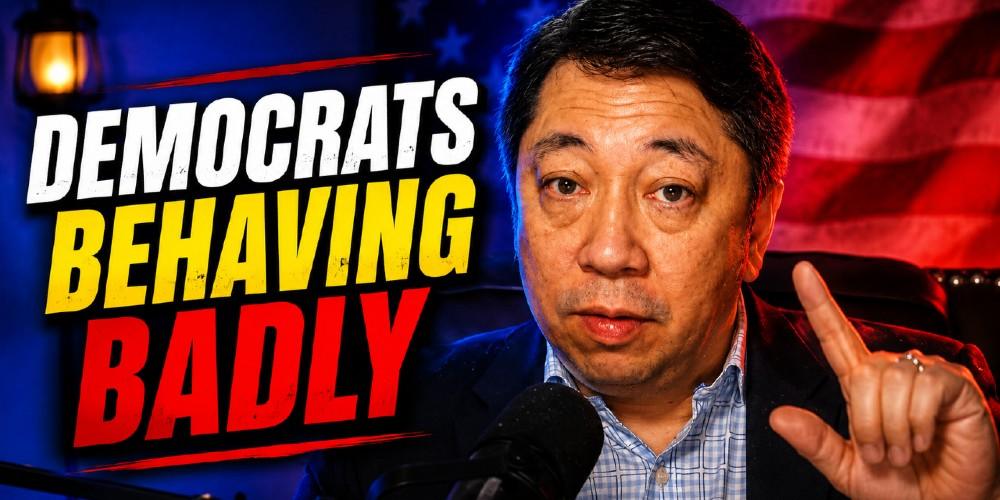

JD lays out sharp warnings about three Democrats whose actions deserve scrutiny and explains why a quiet but deadly national risk — attacks on the power grid — deserves our full attention. This piece breaks down the political fallout, why Republican voters should care, and what ordinary Americans need to know about a vulnerable national utility system. Expect plain talk, pointed criticism, and a call to wake up to both political corruption and real infrastructure threats.
First up are the glaring ethical questions surrounding a high-profile California campaign that now smells like insider dealing. When politics and pay-to-play meet, the people lose, and Democrats who pretend to champion transparency get exposed as compact with insiders. Voters should demand clear answers and consequences when shady ties emerge between campaigns and insider networks.
Then there’s the Texas picture, where a pragmatic, organized Republican effort can win if the message reaches voters. A misstep on outreach and messaging will hand the advantage to the other side, because grassroots energy and clarity of purpose matter more than fancy ads. Conservatives in Texas need to get serious, mobilize volunteers, and make sure the case for sound policy is loud and relentless.
Public figures who peddle division also get called out here, and that’s part of the political terrain we’re navigating. When leaders broadcast polarizing rhetoric, it fractures communities and wastes political capital that could be spent on real problems. Conservatives should push for unity around practical solutions, not let outrage hijack the conversation.
Shifting from politics to public safety, federal officials have quietly told utilities to assume the enemy could already be inside the grid. That language is chilling and should wake everyone up: the threat is not hypothetical, and the worst-case scenarios are not confined to Hollywood scripts. Our national electrical system powers hospitals, communications, water treatment, and commerce, so any compromise risks chaos.
Cybersecurity for utilities has been underfunded and underprioritized, and this is exactly the blind spot our adversaries would love to exploit. Private companies and local operators often lack the aggressive, centralized defenses needed to repel sophisticated intrusions. Republicans should push for strong, sensible reforms that prioritize hardening the grid, clear liability rules, and rapid response protocols that don’t turn into federal overreach.
Planning for an internal attack means more than software updates and firewalls; it demands culture change, better vetting, and redundancy across systems. Utilities must adopt zero-trust thinking, segment networks, and maintain trained personnel who can respond without waiting for a distant bureaucracy. Smart policy encourages public-private partnerships, not knee-jerk nationalization of essential services.
The political angle matters because bad actors in office can shield or enable risky behavior, and that’s exactly why voters should not ignore scandals. When elected officials have questionable ties to insiders or private interests, the public safety consequences can be immediate and tangible. Hold our leaders accountable; the stakes are too high to treat ethics violations as theater.
If Republican operatives want to win in contested areas, they must link everyday concerns to competence on security and integrity. Tell voters how corruption and lax cybersecurity translate into higher costs, unreliable services, and potentially dangerous blackouts. Clear examples and local stories beat abstract rhetoric every time, so ground the arguments in real impact.
Influence in the digital era moves fast, and public figures who push extreme narratives often provoke swift backlash that changes the political map overnight. Use those moments to highlight contrasts in leadership style: one side offers stability and common-sense solutions, the other drowns in spectacle. That contrast, when presented crisply, wins trust and votes.
This conversation crosses the line between political accountability and national security, and both demand attention now. Conservatives should keep the pressure on ethical transparency, push for practical grid resilience, and refuse to let elites or activists frame the debate on their terms. The answer is steady, competent leadership that protects Americans and defends honest government.





You must be logged in to post a comment Login