
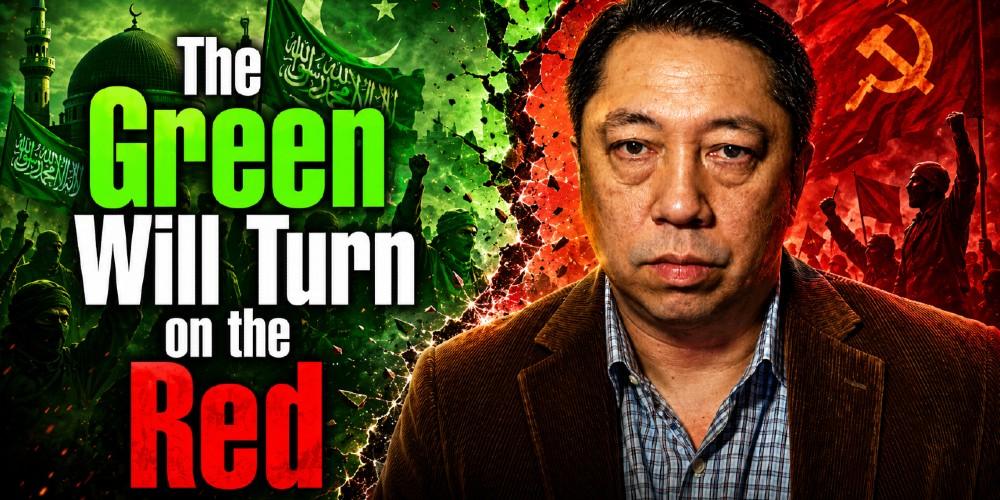

The radical left and political Islam often show up on the same protest line, but they are not partners with the same destination. This piece unpacks how that alliance forms, why the Islamist side tends to be patient and disciplined, and how history repeatedly shows who walks away with power. I trace real-world patterns from Tehran to modern Western politics and warn why one side in this partnership should be wary of the other.
On the surface, the red-green alliance looks like a marriage of convenience driven by common enemies and outrage. The left brings mass mobilization, moral language, and institutional cover that makes activism feel righteous and urgent. Political Islam brings organization, hierarchy, and the long game thinking that treats gains as permanent. Those are complimentary at first, but they point toward different endgames.
History gives a blunt lesson. In Tehran the revolutionary coalition that toppled a dictator included secular leftists and religious forces, and after the regime fell the secular partners were purged. That pattern repeats because one partner is focused on immediate transformation while the other is preparing to govern under a religious framework. When ambitions collide, the disciplined faction that planned for power keeps it.
The marriage of convenience shows up in modern theater too, sometimes in unexpected alliances like progressive groups pairing with Islamist causes. Those moments are striking not because they are rare but because they reveal how shared anger can paper over deeper contradictions. Protest energy can topple institutions, but building a stable order requires compatible goals and mutual trust, and those are often missing.
The Muslim Brotherhood and similar movements practice a patient approach that looks like strategy, not spontaneity. Their doctrine emphasizes slow institutional penetration and retaining power once obtained, which is why intelligence and legal communities have flagged them for concern. That methodical approach explains why, after shared victories, ideological partners who assumed they were leading often find themselves sidelined.
Politics on American soil has not been immune to this dynamic. Local and national coalitions that mix far-left activists with Islamist-aligned groups sometimes translate protest visibility into actual political influence. Winning votes and governing requires different skills than organizing a rally, and when those two worlds collide the disciplined organizer often ends up running the show in ways the other side did not anticipate.
A coalition held together only by hatred can tear down, but it cannot build anything stable or lasting. That is the common-sense warning running through every successful takeover where allied factions had incompatible end goals. When one faction sees governance as permanent and sacred, and the other sees revolution as a purging moment, only one will stay to write the rules.
“This is the green half of the story. The Marxists in this partnership should pay close attention, because the people they call allies have never once kept that bargain.”
Donation
Buy author a coffee
Donate





You must be logged in to post a comment Login