
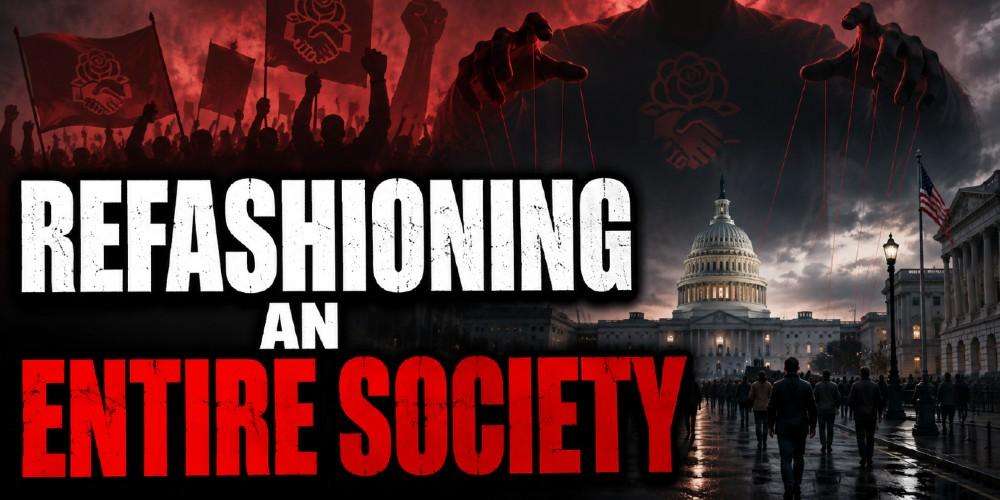

Chris Rabb’s primary win in Pennsylvania’s 3rd made one thing obvious: a faction inside the Democratic coalition is openly aiming to remold our institutions, not just tweak policy. This piece looks at what that shift means for voters, how mainstream politics misses the change, and why conventional Republican responses so far are coming up short. Expect clear-eyed critique mixed with plain talk about stakes and strategy.
Rabb campaigned with a blunt message tied to the Democratic Socialists of America: the job is to fight what they call fascism by reshaping society and altering Congress itself. That kind of language isn’t academic theater; it signals an organizing strategy built around structural change. When activists prioritize transforming institutions over working within them, the definition of normal politics bends toward their vision.
Most voters still treat Democrats as a familiar party of budget debates and regulatory disputes, so they fail to notice when candidates are pushing a different agenda. That gap in recognition matters because primary voters in heavily Democratic districts usually pick nominees, turning general elections into formalities. When the nomination process hands the party to those who want to rewrite the rules, policy shifts from theory to implementation very quickly.
Look at places where similar candidates have won: once they clear primaries, controversial priorities move into governance. Positions that used to be fringe—opposition to certain federal enforcement efforts, or sweeping reallocations of public funds—become plausible when activists control local levers. The risk is not just odd policies in one city; it’s a playbook that expands outward from safe districts into broader influence.
Republicans tend to respond like technicians fixing a broken widget: track the polls, run contrast ads, dig up dirt on personalities. Those tools help on the margins, but they don’t meet the ideological project they face. When an opponent treats elections as a way to replace or hollow out institutions, you need a strategy that recognizes an existential aim rather than a collection of tactical mistakes.
The DSA network treats elections as more than contests for power; they are moments to staff government with people trained to pursue systemic change. That’s a different order of politics than the old view that both parties shared basic constitutional commitments. When one side stops accepting those guardrails, the mere act of winning office becomes a method of permanent transformation.
Footage and statements from organizers underscore this change: there is less code-switching into the soft language of past Democratic campaigns and more explicit talk about remaking Congress and society. Those messages not only motivate the base, they help shape candidate pipelines and training programs. What sounded like radical rhetoric in a speech becomes standard operating procedure once supporters occupy key offices.
Theatrics play a role too. Political theater—burning a flag as a stage prop, for example—signals that symbolic rupture matters as much as policy details. Combine that with substantive demands like abolishing interior enforcement agencies or extending public benefits regardless of legal status, and you get a program that reorders priorities in ways many voters never anticipated. These are not academic arguments; they are operational directives for officeholders.
Voter inattention fuels the problem. Many people pick a name on a low-salience ballot slot without checking who the influential backers are or what their movement measures as success. When the media treats each new face as simply a fresh voice in a big coalition, it blurs the reality that some of those voices represent a coherent, disruptive ideology. That blur makes it easier for ambitious agendas to creep into the mainstream.
Scripture records the Lord Jesus describing two builders. One constructed his house upon rock after hearing and heeding instruction. The other built upon sand after hearing the same instruction yet disregarding it. When the rain descended, the floods came, and the winds blew, the house upon the sand fell, and great was the fall of it.
A movement willing to discard long-standing checks and balances invites a comparable test. The stress point arrives when layered protections have been weakened and the cumulative impact becomes visible. The question facing defenders of the current order is how to treat this as an ideological enterprise rather than a series of isolated electoral flukes.
The practical response is obvious in outline and stubborn in execution: identify where activist infrastructure controls nominations, inform and motivate voters in those low-salience races, and offer a competing narrative that frames institutional continuity as the conservative choice. That means investing in grassroots turnout, sharpening policy contrasts, and making clear what structural change would actually look like in everyday governance.
Ignore the threat and you risk waking up to altered institutions that feel permanent. Facing it honestly means changing tactics and priorities now, not after the house built on sand collapses into a new status quo.





You must be logged in to post a comment Login