
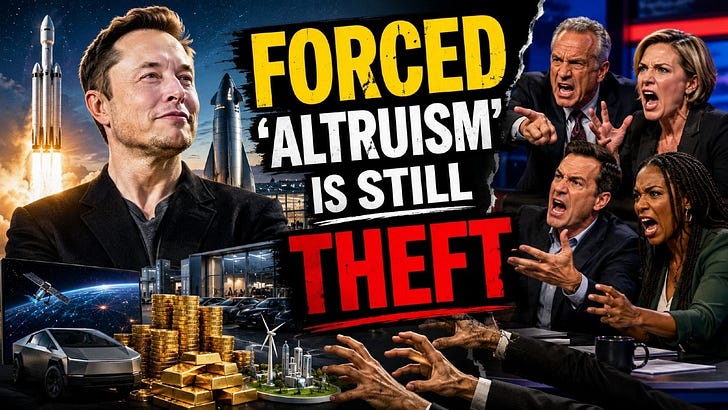

Elon Musk just crossed a historic threshold as SpaceX went public and his paper wealth leapt beyond a trillion dollars, and the reaction from the political left revealed more about them than about him. This piece examines the raw emotions aired on a CNN panel, the polite language used to mask demands, and the deeper ideology driving the attack on private success. I argue that envy, a call for coerced giving, and an underlying Marxist logic explain why some people cannot accept extraordinary achievement.
The day Musk officially became the world’s first trillionaire sparked predictable hand-wringing instead of curiosity about what he built. The response wasn’t about innovation or jobs; it was about what should be taken away. The camera captured a mix of sorrow and moral posturing that looked more like grief than analysis, and the reaction from the was not curiosity about how a man built all of that. It was something closer to mourning.
All day long, I’ve been listening to liberals, count and spend Elon’s money for him. This envy, jealousy, hatred of success. Why is it immoral? Why is it wrong for somebody in our system, our capitalist system, in the greatest nation on earth, to go out and build a company, build companies, build technologies, go into space, aim to go put a colony on Mars, give internet to half the world, all the things he’s doing?
Scott Jennings refused to join the chorus of moral condemnation and spoke plainly about what was happening. He named the honest feeling on display: envy, and he pointed out the absurdity of deciding for someone else how to use what he earned. That clarity is rare in mainstream media, where moral grandstanding often replaces honest debate, and Jennings was right to plant it in the center of the table.
https://x.com/EricLDaugh/status/2065772130822717613
Rich people in this country pay the vast majority of taxes, and I hear people today saying, “Oh, it’s time that we tax the rich.” Folks, I got news for you. We already tax the rich. But is it for us to sit around and say, “There’s a limit on what you can build, there’s a limit on what you can earn,” and it’s now my job to tell you what to do with your money?
Not everyone on the panel used blunt terms like envy; some reached for softer phrases that sound virtuous but function as commands. Bakari Sellers talked about the need for “altruism,” phrasing it as a requirement rather than a choice. That swap is crucial because a demand dressed as kindness is still a demand, and it turns voluntary charity into a social obligation enforced by power.
I’m not saying that I’m mad at him for being innovative enough for creating an IPO that creates wealth or many others. What I am saying, however, is that there has to be some nature of altruism.
There’s a sleight of hand when you strip warmth from generosity and call the remainder a civic duty. Musk already donates, invests in technology that connects disaster zones, employs hundreds of thousands, and has pushed private spaceflight into a new era. But none of that satisfies critics because their real benchmark is obedience, not benevolence.
When giving is coerced by social pressure or law it stops being generosity and becomes redistribution with a smile. Calling for mandatory altruism is just another way of saying the collective may dictate how a private citizen spends his fortune. Once that premise is accepted, the next step is easy: justify more aggressive redistribution and ignore the cost to innovation and freedom.
At the core of these reactions lies a deeper intellectual current that rarely gets named aloud: Marxism. Not the caricature with banners, but the idea that wealth is theft and success is moral guilt. Treating creators as criminals and demanding the state or the mob redistribute their gains is the very logic Marx warned about, repackaged in polite TV language.
For where envying and strife is, there is confusion and every evil work.
Scripture points out the corrosive power of envy long before modern ideologies did, and that moral insight still applies. Envy cannot build; it only seeks to take, and dressing it up as fairness or compassion only makes it more dangerous. The panel’s confusion showed how easily debate about success can be turned into permission to punish it.
Keep an eye on the three words next time a successful American is circled by critics: envy, altruism as a demand, and Marxism as the endgame. Each step parries away from the facts of accomplishment and toward control over how people live and what they build. Success is not a sin, and building is not theft; no committee of professional resenters should get to put a ceiling on human ambition.






You must be logged in to post a comment Login