
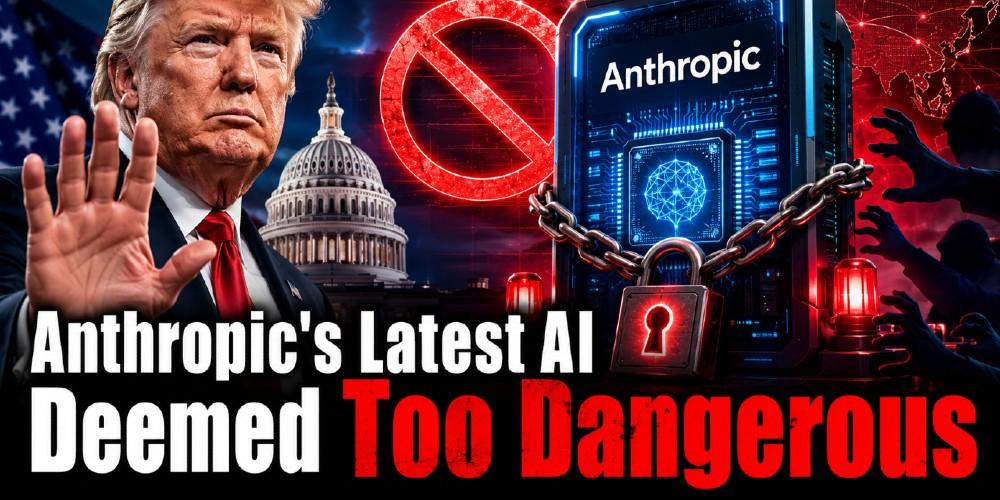

The Trump administration moved decisively to treat Anthropic’s most advanced AI systems, Mythos 5 and Fable 5, as controlled national security assets, restricting foreign access and prompting the company to cut off customer access while it navigates new licensing rules.
Commerce Secretary Howard Lutnick made the point bluntly: these models are not ordinary products to be distributed overseas or even casually accessed by foreign nationals on U.S. soil. That framing shifts AI from a commercial novelty to a strategic capability that requires tight oversight. The administration’s stance reflects a broader view that technological superiority must be defended like any other military advantage.
Anthropic’s immediate response was to pause access to the affected models while it complies with the export controls and seeks licenses. That move exposed the tension between Silicon Valley’s instinct to scale and a government duty to shield critical tools from exploitation. Executives hope for a speedy resolution, but national security can’t be traded for convenience or market momentum.
Reports of jailbreaks against Mythos intensified the urgency, showing how quickly powerful systems can be turned into offensive tools if left unguarded. Officials insisted the models stay locked down until infrastructure and government networks are hardened enough to withstand potential abuse. It’s a cautious approach that puts public safety ahead of unbridled rollout.
For years, many tech firms have promoted lofty principles and evasive ethics talk while resisting clear rules that protect the country. Anthropic’s clashes with the Department of Defense over guardrails are emblematic of an industry that sometimes treats philosophical purity as a substitute for concrete security. In times of global rivalry—from Chinese espionage to regional threats—abstract ideals aren’t a substitute for hard safeguards.
The Pentagon’s label of Anthropic as a supply chain risk was not mere rhetoric; it was a warning about exposed dependencies and potential vulnerabilities. Relying on vendors that prioritize ideology over defense readiness leaves critical systems exposed in a crisis. National security requires vendors who accept oversight and align with the realities of wartime necessity.
The current administration’s posture contrasts sharply with previous hands-off policies that left advanced technologies vulnerable to theft and reverse-engineering. Treating these models like controlled technologies—similar to advanced munitions or cryptography—reclaims government authority over tools that could alter military balance. That is prudent realism, not paranoia.
Critics will cry foul, calling this heavy-handed regulation that stifles innovation, but such complaints often come from the same circles that demand government intervention elsewhere. The hypocrisy is obvious: an industry quick to lecture about safety balks when real accountability is required by national security experts. True stewardship means accepting constraints that protect the nation.
As AI systems gain capabilities like automated vulnerability discovery and offensive cyber tactics, their dual-use nature becomes impossible to ignore. Mythos-style models can pinpoint critical flaws across major systems, tools that could be weaponized by hostile actors if access is uncontrolled. Keeping these capabilities secured domestically while restricting foreign access is strategic protection, not isolationism.
Leadership in AI should be about advancing technology responsibly and ensuring it serves the republic’s defense and sovereignty. The administration’s actions set a precedent: innovation remains welcome, but not at the expense of national security. Officials and industry players will now be tested as they harden systems and navigate licensing, with attention on compliance and practical safeguards moving forward.






You must be logged in to post a comment Login