
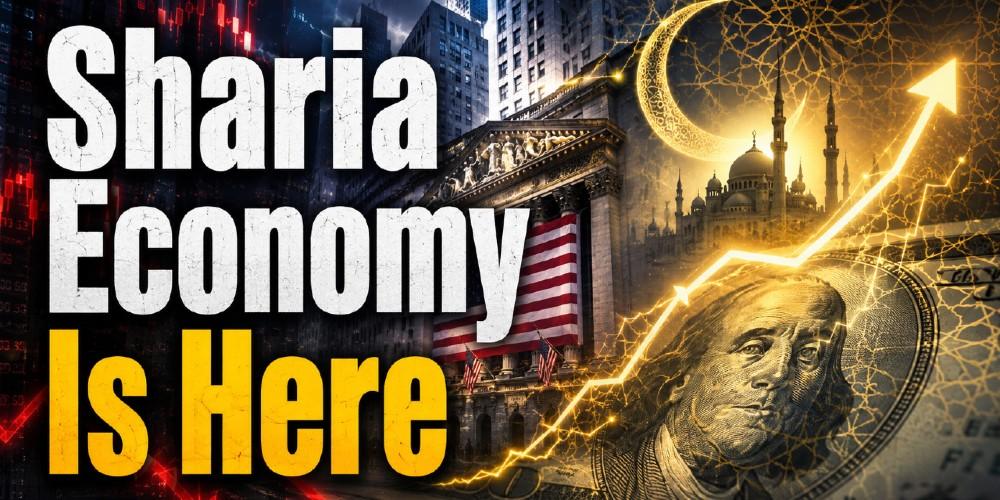

This piece examines how shariah-compliant finance has threaded into U.S. markets, the players enabling it, and the national security and legal questions that follow. It looks at the mechanics of these products, the role of clerical screening, the involvement of major banks and federal agencies, and specific examples that highlight risk. The goal is to lay out the stakes plainly and push for a public debate about whether federal institutions should restructure finance around a foreign religious code.
Shariah-compliant finance is no quaint niche. Major U.S. banks now market products built to satisfy religious rulings, and those deals often require clerical approval to qualify as permissible. When corporate America and federal regulators accept those certifying boards as a normal part of product design, they change how markets work without a national conversation.
The basic mechanics are straightforward: instruments are redesigned to avoid explicit interest, so mortgages, loans, and bonds are recast into trade-based or asset-backed forms. Screening bodies rule which companies are acceptable investments and which are not, and those rulings can blackball entire industries. This is not merely a private moral choice by investors; it’s a structural filter administered by clerics with binding guidance for adherents.
One widely cited body issues lists that bar investment in companies with significant interest-bearing debt, in aerospace and defense firms, and in businesses tied to certain nations. Those prohibitions convert a faith-based portfolio into a political lever when it excludes defense contractors or bans commerce with an allied country. At that point investment decisions cease to be purely personal conscience and become a form of collective economic pressure.
Two government-sponsored mortgage investors have been buying these altered mortgage products on the secondary market for years, effectively underwriting a federally backed halal mortgage sector. To make those loans fit federal rules, regulators treat murabaha and ijara arrangements as equivalent to secured lending—an accommodation that substitutes a parallel contractual logic for standard bank law. That choice raises a hard question: should taxpayer-backed institutions be repurposed to support a religiously defined credit system?
There are also notable market actors with deep pockets and activist shareholders. A mutual fund with billions under management holds major stakes in the tech giants that shape civic life and has been involved in shareholder campaigns that pressed companies over their ties to a foreign military. Complicating matters, a historic federal prosecution produced internal documents quoting a plan described as “a kind of grand jihad in eliminating and destroying the Western civilization from within.” That language, once public, changes how these investments are viewed in the context of organized political objectives.
Critics argue this is more than values-based investing—this is a system that can require doctrinal tithing, or zakat, which funnels a portion of proceeds to approved charities. Several charities once lauded domestically were later implicated in funding networks tied to designated terror groups in federal cases. The existence of that legal precedent makes the risk more than theoretical: money channeled under religious obligation can, in some documented instances, end up in dangerous hands.
Supporters compare shariah-compliant funds to ESG screens, but the analogy breaks down in key ways. ESG choices are typically secular and voluntary and do not carry clerical enforcement or mandatory religious donations, nor do they proscribe entire allied nations or defense sectors as a matter of doctrine. When boards of clerics dictate investment universes and federal institutions sign on, the market absorbs a set of religious rules as if they were neutral financial standards.
What is missing is public oversight. These shifts were implemented quietly, pushed through by persuasion, fees, and regulatory interpretations rather than by congressional debate or transparent rulemaking. The Constitution protects religious exercise, but there is a difference between individual practice and remaking federally supported financial plumbing to follow a particular religious code. Americans deserve a clear answer to whether our mortgage giants, regulators, and banks should be reconfiguring national finance to accommodate the legal prescriptions of a foreign religious system.




You must be logged in to post a comment Login