
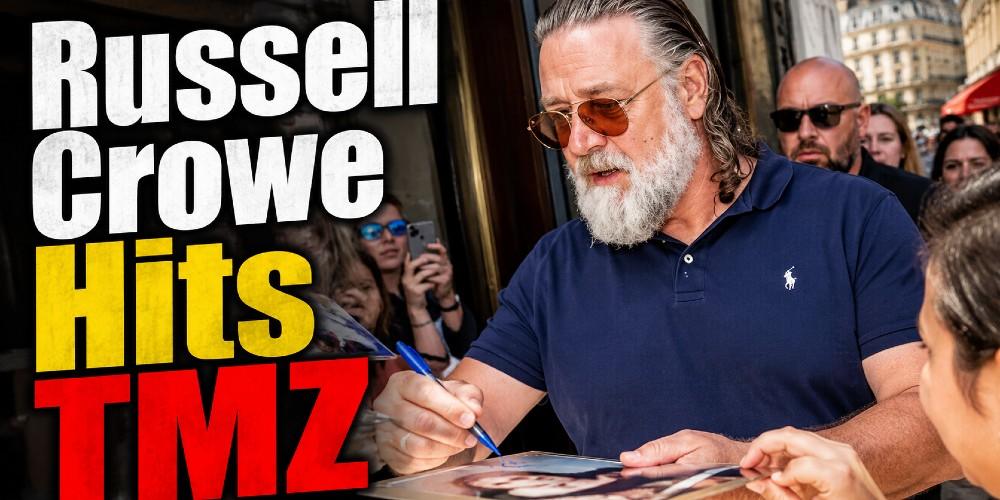

Russell Crowe was stopped by a crowd outside a Paris hotel, set strict boundaries, and then watched a tabloid spin that moment into controversy; the footage, his blunt on-the-spot instructions, and his follow-up on X show a simpler truth about order, respect, and how modern media chases outrage. The actor spoke plainly to the group, handled fans without an entourage, and later challenged the clickbait narrative that tried to make him look cold. This piece lays out what happened on the pavement, how the coverage distorted it, and why a firm request for civility matters in a world that rewards spectacle.
The scene in Paris was straightforward: a crowd edging too close, hotel access at risk, and a well-known actor stepping in with a clear instruction to restore calm. He told the group exactly what to do and why, using words that left little room for misinterpretation: “Stay where you are. Don’t push in on me. I’ll come to you. Give everybody space. As soon as somebody’s a dick, I’m gone.” That was not drama; it was a boundary designed to protect people and keep the flow moving for guests.
Crowe made it obvious he planned to engage, but only under basic rules of respect, and he followed through by greeting those who complied. People who stayed back got autographs and selfies, and the path to the hotel stayed open for other guests, which is the whole point of asking for space in a public spot. The actor did all this without a visible security detail, which undercuts any narrative that he was hiding behind privilege instead of being accessible.
Of course, a short clip and a charged headline were all tabloids needed to manufacture heat, and one outlet even labeled the moment an “explosion,” a dramatic choice that skewed the tone toward conflict. That edit turned a brief assertion of order into a supposed meltdown, and once that frame exists it’s hard to unwind for casual readers skimming headlines. The tension between reality and headline is exactly what fuels the modern click economy—small, controlled actions become sensational stories when framed for clicks.
Crowe’s reply on X cut straight through the misdirection with the bluntness he used on the street, and he didn’t sugarcoat what happened or how it played out. He noted that autographs and photos were handled, the hotel entrance remained accessible, and his schedule wasn’t derailed, and he asked the simple question: “What’s your problem?” That rhetorical pushback was aimed at the media machinery that often amplifies conflict for profit rather than clarifying context.
This episode highlights how everyday interactions can be distorted when outlets chase a narrative instead of reporting details, because outrage spreads fast and nuance does not. A request for basic civility becomes evidence of aloofness if the clip is cropped to emphasize tone over content, and that cropping changes how people perceive both fans and the celebrity. When journalism prioritizes virality, normal human exchanges get flattened into caricatures of drama.
The fan side of this is worth noting too, because public figures navigate an odd bargain: they want to be approachable, but they also need a way to manage crowds without risking safety or chaos. Crowe’s demand for space honored the people willing to wait politely while denying the momentum to those who might turn the scene into a shove-fest, and that kind of line-drawing is not hostility, it’s practical crowd management. Respectful fans walked away with autographs; anyone trying to dominate the moment lost their chance.
So the story is not about an actor refusing his supporters or being rude for the sake of it, it’s about a simple social contract that was enforced in plain language. The camera caught a short exchange, a tabloid framed that exchange for clicks, and the actor responded by clarifying the facts and challenging the distortion. Crowe didn’t stage a spectacle; he asked for decency and answered for it when the spin machine took over.




You must be logged in to post a comment Login