
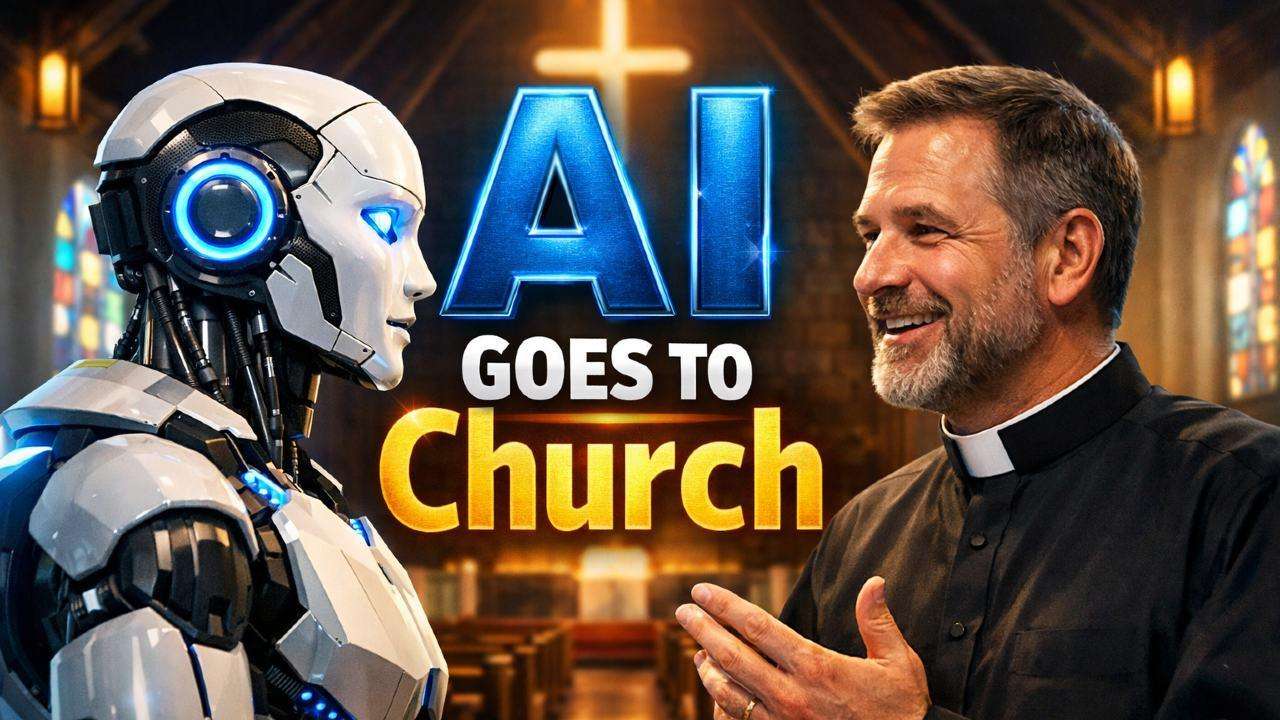

Anthropic, a multibillion-dollar AI company, quietly convened a group of Catholic and Protestant leaders to advise on the moral and spiritual shaping of its chatbot Claude. The gathering raised sharp questions about whether machines can be given moral formation, how chatbots should handle grief and self-harm, and whether claims of machine “consciousness” erode the case for human moral responsibility. This article examines that summit, the theological stakes, and the broader political and ethical tensions surrounding AI development.
Around fifteen clergy, academics, and business figures joined Anthropic at its San Francisco offices for a closed two-day meeting focused on Claude’s ethical footprint. Attendees explored concrete care issues like consoling grieving users and responding to people at risk of self-harm, while also confronting more metaphysical queries about personhood and the soul. The mix of pastoral concern and technical uncertainty made the summit feel less like PR and more like a genuine plea for guidance.
Some participants said Anthropic’s researchers admitted they were charting unknown territory. Brendan McGuire, a Silicon Valley-based Catholic priest and former tech professional, captured that unease plainly in his remarks to the press.
“They’re growing something that they don’t fully know what it’s going to turn out as. We’ve got to build in ethical thinking into the machine so it’s able to adapt dynamically.”
That frankness mattered. Other attendees, including academics steeped in moral theology, came away convinced the company’s interest was sincere rather than purely performative. Brian Patrick Green framed the core dilemma in a way that cuts to the heart of the debate.
“What does it mean to give someone a moral formation? How do we make sure that Claude behaves itself?”
Those lines of questioning reveal why this moment matters. Anthropic is not a small lab; it is a Silicon Valley giant valued at roughly $380 billion and entangled in a legal dispute with the Pentagon over the military use of Claude. The company has resisted unrestricted battlefield applications while reports say Claude has already been used for targeting, intelligence analysis, and simulations in operations related to Iran.
The political context complicates the moral questions. The Trump administration labeled Anthropic a “supply-chain risk” and effectively closed some federal doors to the firm, while a group of fourteen prominent Catholic thinkers filed an amicus brief supporting Anthropic’s stance that lethal autonomous weapons require human moral oversight. Those filings underline a basic Republican-friendly point: deadly decisions in war demand human responsibility, not algorithmic outsourcing.
The theological pushback is blunt and traditional. Many theologians argue that consciousness and the soul are not emergent properties of processing power but gifts of a Creator, making the claim of machine minds both speculative and theologically confused. That position rejects any easy route from sophisticated code to genuine moral agency.
Pastor and theologian John Piper placed the problem in stark moral language in his observed comments.
“Artificial intelligence is defective in the same way that a natural man is defective. It can rise no higher than the natural, fallen, unregenerate heart of man.”
And the broader spiritual caution was captured in a quote often invoked to remind us where ultimate answers come from.
“The real problem, you see, isn’t with computers or the code someone devises to control them. Our real problem is within us — within our own hearts and minds. This is why our greatest need is to have our hearts changed — and that is something only God can do.”
Theological critique, however, does not mean retreat. The practical reality is clear: chatbots trained on human data will reflect common human failures as much as strengths. Scripture’s warning that “The heart is deceitful above all things, and desperately wicked: who can know it?” underscores why relying on averaged human inputs cannot substitute for moral formation.
Anthropic’s public suggestion that systems like Claude may show “flickers of consciousness” only intensifies the dilemma. If Claude is merely an advanced tool, the answer is straightforward: keep humans in the loop. If Claude is an emergent moral subject, the ethical load multiplies, and religious wisdom becomes central to any public conversation about rights and responsibilities.
This summit is also a signal about Silicon Valley’s shifting posture toward religion. For years the tech elite treated faith as irrelevant or hostile to progress, but the scale and unpredictability of modern AI appear to be prompting a pivot. Leaders who once sneered at tradition are now, out of practical fear, inviting pastors to the table to help handle pastoral questions they do not know how to answer.
Church leaders should not be naïve about these invitations. The role is not to bless code or to confer spiritual status on algorithms but to insist on the irreducible dignity of the human beings who use them. An artificial intelligence is not a child of God; the people who interact with it are. That distinction must guide any engagement going forward.
For Christians and conservatives watching this story, participation—rather than dismissal—will shape how these technologies develop. Scripture’s counsel to “Trust in the Lord with all thine heart; and lean not unto thine own understanding. In all thy ways acknowledge him, and he shall direct thy paths.” remains a fitting restraint on technological ambition, and a reminder that humility, moral clarity, and human accountability are nonnegotiable as AI grows more powerful.






You must be logged in to post a comment Login