
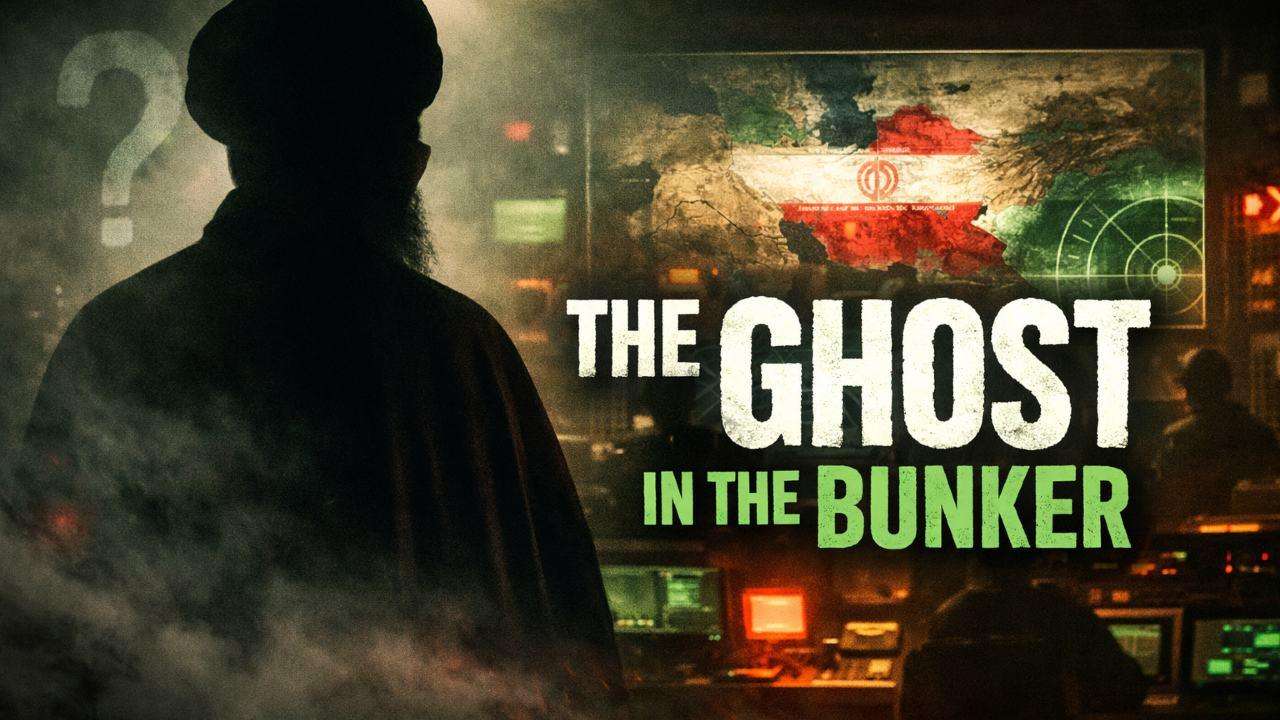

This piece examines who is actually running Iran after the February 28 strike that killed Ali Khamenei, the strange vanishing of his son Mojtaba as Supreme Leader, and three plausible explanations for that silence: the IRGC pulling the strings, a wounded leader hidden from view, and the rising danger of AI-driven propaganda mixed with apocalyptic belief. It stays direct, skeptical, and focused on the facts and claims that matter for policymakers and the public. Quotations from officials and witnesses appear exactly as reported. The aim is to clarify what we know, what we do not, and why the absence of a visible leader is itself a strategic signal.
When Ali Khamenei died in the early hours of Operation Epic Fury, the Islamic Republic lost the man who had held its contradictory system together for decades. His son Mojtaba was named Supreme Leader on March 8 and has not appeared in any verified image or video since that appointment. Instead, his supposed statements are read aloud by anchors, which has created a vacuum the regime cannot easily fill with credibility.
The lack of verifiable appearances has produced competing explanations, none of which can be confirmed publicly because opacity is a governing method in Tehran. In systems built on ritualized authority and spectacle, absence becomes meaningful. The question is whether the silence is a cover, an incapacity, or the groundwork for a different, engineered form of legitimacy.
One straightforward reading is that the Islamic Revolutionary Guard Corps is running the show and Mojtaba is a face they can use when needed. As the Council on Foreign Relations put it, “Taking out Iranian Supreme Leader Ayatollah Ali Khamenei is not the same as regime change. The Islamic Revolutionary Guard Corps is the regime.” That assessment fits the pattern of modern autocracies where visible authority is delegated to a symbolic chief while a deeper security apparatus makes decisions.
Evidence pointing to that reality piles up: his first pronouncements were read by television hosts, and senior sources say the IRGC pressured the Assembly of Experts to name Mojtaba. U.S. officials have been blunt; Secretary of Defense Pete Hegseth described him as “wounded and likely disfigured,” and later said Mojtaba is “scared,” indicating both physical harm and a lack of standing. Even U.S. political leaders have publicly questioned whether the man exists in the form the regime claims.
Another plausible explanation is that Mojtaba is alive but so badly wounded that the regime believes it cannot show him. Multiple anonymous sources and diplomatic reporting claim severe facial injuries and major damage to one or both legs, with at least one intelligence source saying he may have lost a leg. Iran’s state television used the Farsi term janbaz to describe him, a word reserved for those badly wounded in war, and that slip hinted at a reality the officials refuse to display.
A system that depends on an image of spiritual and physical authority cannot easily project that image from behind surgical masks and scripted texts. The IRGC knows the optics and has incentives to hide a leader who looks broken, because a visible martyr who appears maimed undermines the myth of divine invincibility that sustains the theocratic state. That practical problem can lengthen crises and deepen domestic fractures, particularly when crowds openly celebrated the previous leader’s death.
The third thread links Mojtaba’s reported beliefs and inner-circle worship to modern information tools: an apocalyptic outlook plus synthetic media. Jaber Rajabi described him as “apocalypse-obsessed,” claiming Mojtaba told associates he “will have a special part in hastening humanity down that path.” Rajabi also warned the man could be “more dangerous than 50 nuclear bombs,” language that underscores the mix of zeal and ambition attributed to him by former insiders.
That mix matters because an early April clip purporting to show Mojtaba in a command center was debunked as AI-generated; detection tools rated it over 71 percent likely to be synthetic. Analysts note Tehran has begun using generative AI in its information campaigns, and the technology now allows regimes to manufacture a leader’s presence without exposing a damaged body. For a movement steeped in prophecy, a rendered, charismatic avatar could be an attractive shortcut to restored authority.
Whatever explanation one favors, the practical consequence is clear: power in Iran looks concentrated in a small security network and in the tools used to manufacture consent. The international community and American policymakers should treat the IRGC as the operational center of gravity while remaining alert to the new risks posed by synthetic imagery and apocalyptic drivers inside Iran’s decision-making class. The silence around Mojtaba is not an absence of meaning; it is a signal to be decoded and checked with policy that recognizes who actually acts in Tehran.




You must be logged in to post a comment Login