
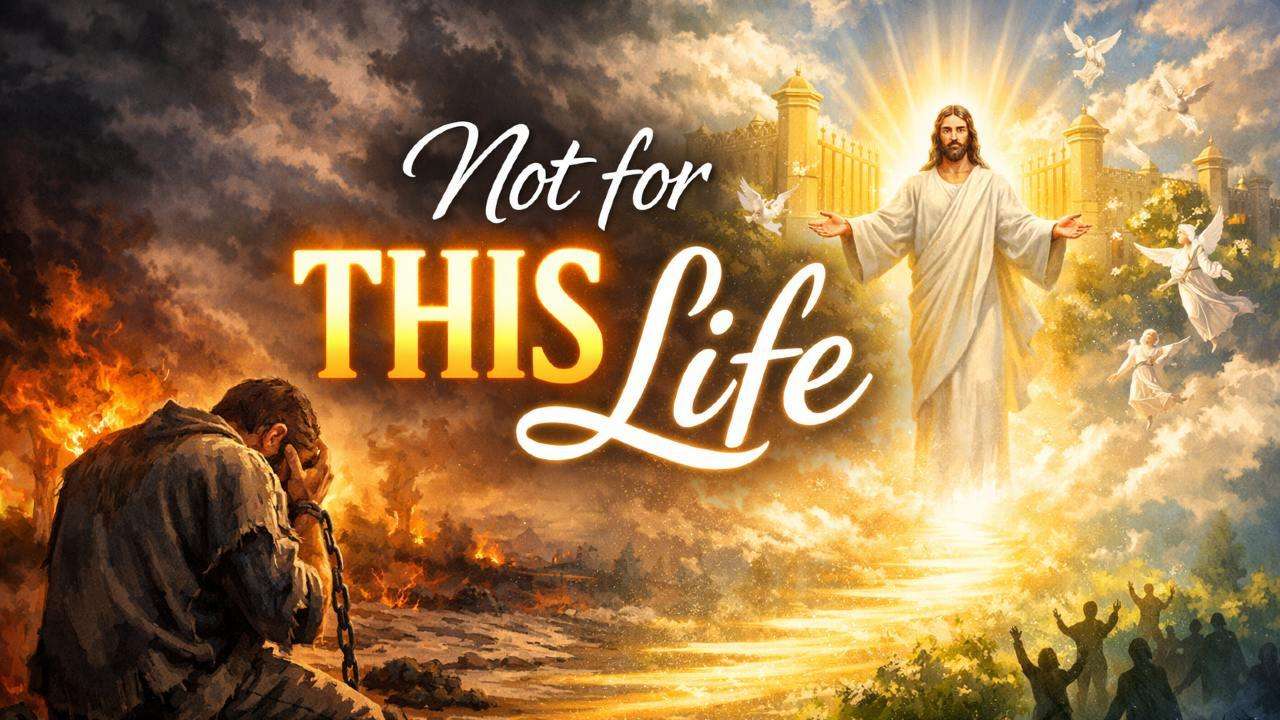

The slogan “Jesus will change your life.” gets tossed around like a promise you can cash for a better job or cleaner thoughts, but that’s not what the Scriptures primarily offer. This piece pulls back the curtain to show that the Bible’s central deal is rescue from death and entrance into eternal life, not a guaranteed upgrade to your present circumstances.
We all hear the line “Jesus will change your life.” in a sermon, a social post, or at a front door, and there is truth in it: faith reshapes the inner person. Still, popular use often turns that truth into a pledge of comfort, stability, or worldly success, and when life gets harder people grow disillusioned and walk away.
The Gospel’s core promise points at death, not daily ease; it is this: you will not perish. John 3:16 focuses on eternal life rather than a more fulfilling Tuesday, and Romans 6:23 frames the transaction the same way by calling eternal life the gift from God. The stakes are ultimate—what happens after the last heartbeat—so that’s where the emphasis belongs.
Paul is blunt in 1 Corinthians 15: if Christ has not been raised our faith is said to be useless and we are to be pitied more than all men. The resurrection is the foundation; without it all the promises collapse into wishful thinking. Christianity rests on what follows death, not on how neatly we rearrange our schedules here.
Saying the Gospel is about eternal life rather than present convenience matters because it keeps evangelism honest. When leaders promising immediate transformation mean better circumstances, they quietly move the goalposts from eternity to comfort, and that’s a shift the Bible never authorized. People deserve straight talk about what faith guarantees and what it doesn’t.
Consider what Jesus told Nicodemus: being born again (John 3) signals a spiritual rebirth that qualifies someone for eternal life, not a download of emotional stability. At Pentecost Peter invited people to repent and be baptized with the promise of forgiveness of sins and the gift of the Holy Spirit, not a brochure of prosperity. Reconciliation with God, not worldly comfort, is the central offer.
The reason to believe is stark and sober: Christ defeats the one enemy no therapy, wealth, or philosophy can outrun. Belief changes your standing before God and cancels death’s finality, which is a rescue of incomparable magnitude. That rescue does not come with a warranty that life will go easier on this side.
The Bible is blunt about suffering for the faithful. Jesus said “In this world you will have trouble.” The Beatitudes point toward persecution and mourning as realities for the righteous, and Paul wrote in 2 Timothy 3:12 that everyone who wants to live a godly life will be persecuted. These are not shy suggestions; they are warnings about the cost of following Christ.
Look at Hebrews 11, the Hall of Faith, and you see people commended for faith who endured torture, exile, and hardship because they did not receive their full promise in this life but sought “a better resurrection.” Their reward was not earthly; it was eternal. Scripture repeatedly reminds us that faithful people often suffer now so they might inherit what lasts.
The Psalms capture the tension too—Psalm 73 shows a believer almost collapsing spiritually when he sees the wicked prosper while the righteous suffer. He only regains perspective by looking to the ultimate end rather than current comfort. That fixates hope on eternity instead of counting on present fairness.
Plainly, unbelievers can and do live admirable, comfortable, and productive lives under the sun. Ecclesiastes confronts that randomness: life’s outcomes can seem arbitrary, and “the rain falls on the just and the unjust alike (Matthew 5:45).” There is no reliable formula that faith equals earthly prosperity and unbelief equals misery.
Faith does produce real transformation in this life—inner renewal, the fruit of the Spirit, changed affections toward money and enemies, and new endurance in suffering. Those are tangible goods, but they are side effects of a relationship whose primary significance reaches beyond the grave. Even apostles like Paul experienced increased hardship after conversion—beatings, imprisonment, shipwreck, and eventual execution—so spiritual benefit does not guarantee easier living.
If you want the message in its full weight, treat the Gospel as a rescue from death rather than a life hack. It offers admission into eternal life and a new standing before God, realities that make suffering bearable for a higher reason, not promises of a stress-free schedule.






You must be logged in to post a comment Login