
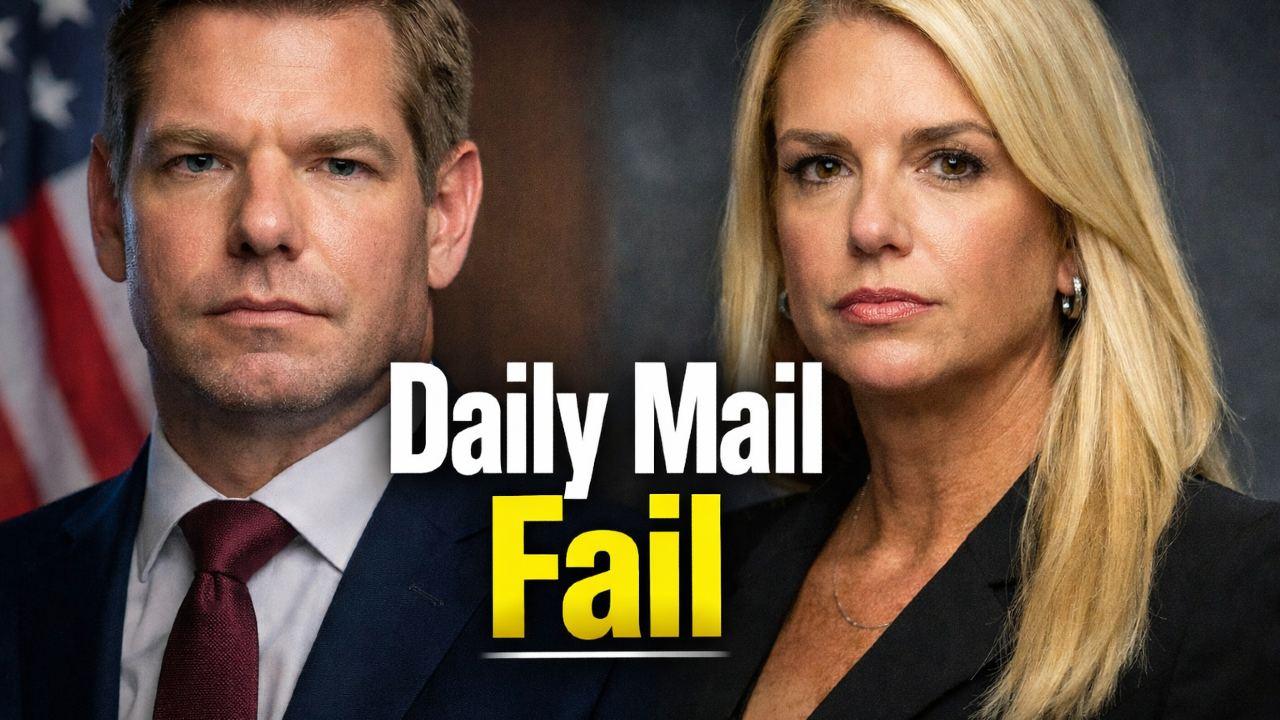

President Trump’s decision to remove Attorney General Pam Bondi sparked rumor and spin, with a tabloid alleging she protected Eric Swalwell from files tied to Chinese intelligence operative Christine Fang. The White House pushed back, pointing to a longer pattern of dissatisfaction rather than a single scandal as the reason for her exit. The tale that Bondi tipped off a partisan Democrat just does not line up with motive, timing, or common sense. What follows cuts through the gossip, lays out the timeline, and explains why the simple explanation — performance and fit — rings truer than a sensational headline.
The moment Bondi was dismissed, Washington chatter swirled and outlets rushed to fill gaps with dramatic theories. One story claimed Bondi had alerted Congressman Eric Swalwell about efforts to release files tied to his past dealings with Christine Fang, known widely as “Fang Fang.” That narrative made for attention-grabbing copy, but attention does not equal accuracy.
From the start it was an odd accusation to pin on Bondi. She is a Republican, a former Florida Attorney General, and someone who had aligned closely with the president. The idea that she would quietly protect a high-profile Democratic lawmaker from exposure of ties to a Chinese intelligence operative runs counter to the incentives and loyalties of the people involved.
The White House response was direct and practical. Officials noted the president’s personal regard for Bondi while also saying he had been unhappy with her on the job for some time. “The president has been considering this change for a long time,” that source said, and that line matters because it places the decision in a broader context rather than tying it to an isolated media splash.
Timing matters here more than tabloids want to admit. Insiders had been watching Bondi’s tenure for months, and the complaints about performance predate the renewed focus on Swalwell’s file. The controversy over the FBI documents is fresh and only recently flared up, including legal moves aimed at stopping their release, so it is implausible that a long-brewing personnel decision hinged on a story that just popped into the headlines.
Look at the politics. Swalwell has long been a polarizing figure, and his alleged association with Christine Fang has been a source of concern for national security watchers across parties. If anything, that history would make Republicans less likely to shield him, not more. Suggesting a conservative Attorney General would tip off a Democratic congressman to protect him from scrutiny lacks both motive and logic.
The substance of the Fang story is serious on its own and does not need dramatic embellishment. Reports about Swalwell’s relationship with the Chinese operative have prompted legitimate questions about judgment and security clearances, especially given his access to sensitive committee work in the past. Those facts deserve clear, sober coverage rather than being weaponized to explain an unrelated personnel move.
There were also smaller but telling moments that fed the larger narrative about Bondi’s standing inside the administration. In public and private, officials noted missteps in handling certain sensitive files. One aide even said she had “whiffed” on the Epstein files release, language that signals real frustration from people closest to the president and reinforces that performance concerns were real and longstanding.
Tabloid instincts aim for the juiciest angle, and sometimes that leads to linking two separate stories because the combination reads like a thriller. But mixing a personnel judgment with a separate national security dust-up creates a conspiracy where none needs to exist. A straightforward explanation — the president decided Bondi was not the best fit for the role going forward — is less sexy but far more plausible.
The Republican case here is simple and direct. Leadership choices should be about competence and alignment with the administration’s goals, not manufactured narratives. Bondi’s departure is a personnel decision rooted in performance and fit, and treating it as a cloak for a clandestine cover-up distracts from the real management questions that matter to voters and to national security.
That real story invites the kind of scrutiny that actually holds officials accountable. It asks whether the Justice Department under Bondi met expectations, whether decisions were communicated clearly, and whether the office delivered results consistent with the president’s priorities. Those are the questions worth asking, and they stand independently of any speculative tale about partisan protection for a controversial congressman.





You must be logged in to post a comment Login