
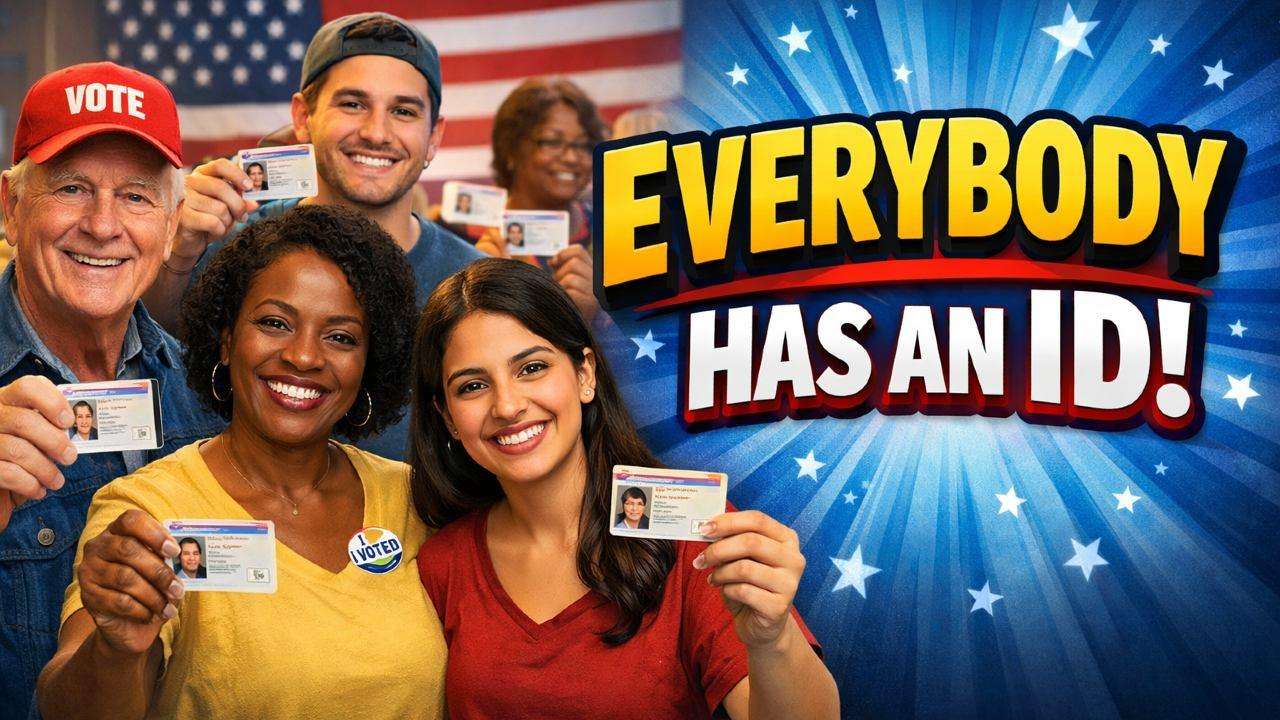

This piece looks at a viral church moment in Alabama, the arguments around voter ID laws and the SAVE America Act, and why common-sense ID rules deserve serious discussion. It examines the on-the-ground reality that many Americans already carry government ID, compares modern ID requirements to historical Jim Crow tactics, and argues for practical steps that protect both access and integrity. The aim is to cut through political theater and focus on facts and fair solutions.
At a Black church in Alabama, Representative Shomari Figures asked a simple question: how many of you do not have a driver’s license? The silence that followed was striking; not a single hand went up. That unscripted moment went viral because it contradicted a familiar political talking point.
Democrats have insisted that voter ID laws are a new form of voter suppression aimed at minorities, and that claim has driven a lot of media heat. But scenes like the one in that church force a pause: if people in communities said to be most harmed already have IDs, the narrative needs reexamination. Politics should follow reality, not the other way around.
The SAVE America Act would require proof of citizenship to register for federal elections, a policy supporters describe as a commonsense safeguard. Opponents label it “Jim Crow 2.0,” arguing it will erect barriers for eligible voters. Both sides use loaded language, so it helps to look at facts and practical consequences.
Research and state experience show the vast majority of eligible Americans possess government-issued identification. Many states that adopted voter ID laws also created ways to get free state IDs, aimed exactly at addressing access concerns. When the barrier is a trip to the DMV, the solution should be outreach and assistance, not blanket opposition.
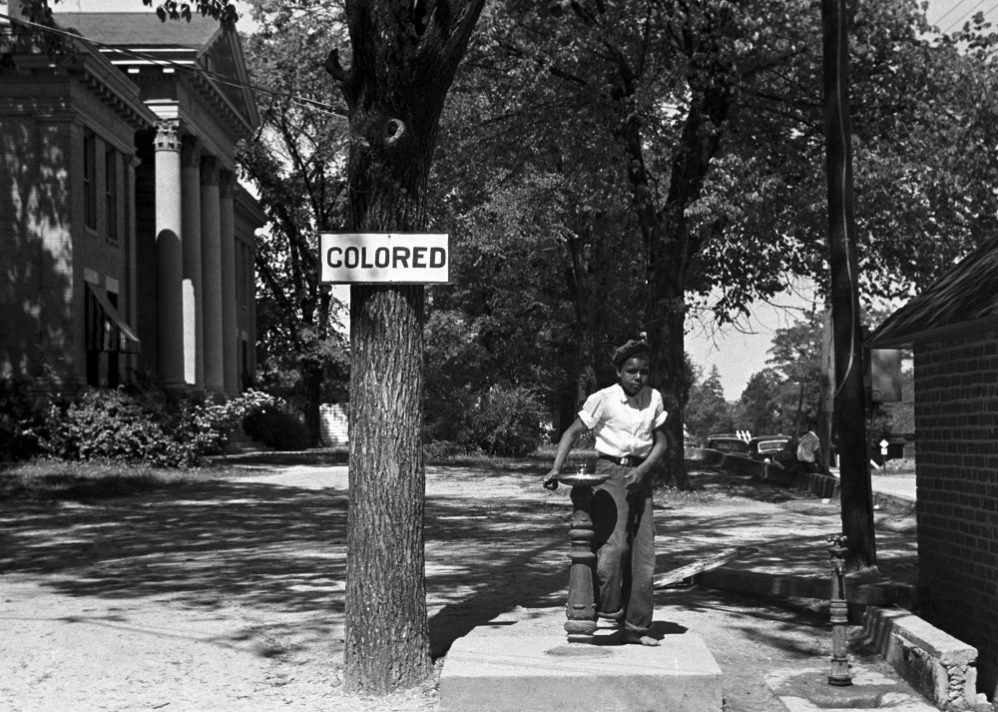
There is a moral and historical difference between Jim Crow-era tactics and present-day ID rules. Jim Crow relied on literacy tests crafted to fail Black applicants, poll taxes intended to price people out of voting, and intimidation backed by violence. Asking for the same kind of ID people use to board a plane or buy medicine is not the same thing as those deliberate, systemic exclusions.
Polling consistently shows broad support for voter ID across demographics, including among many Black voters in multiple surveys. That popularity suggests the issue is not purely partisan theater but reflects common-sense expectations about identification. Political elites who keep insisting the opposite risk sounding disconnected from the communities they claim to represent.
That does not mean every concern about access is irrelevant. Some citizens face real hurdles getting documents needed to prove identity or citizenship, especially seniors, rural residents, and people who moved without updating records. A policy that insists on ID but ignores those gaps is a policy bound to fail the very citizens it aims to protect.
Practical, conservative-friendly fixes are straightforward and doable: expand mobile DMV services, fund weekend and after-hours ID clinics, partner with churches and community centers for document drives, and ensure free state IDs are genuinely accessible. These are low-cost, commonsense measures that protect election integrity while removing avoidable barriers.
For conservatives, the argument is both patriotic and pragmatic: defending the franchise means making sure only eligible citizens vote and making it easy for eligible citizens to prove who they are. That balance should guide lawmakers instead of dramatic rhetoric that freezes good-faith compromise.
Democrats who claim imminent mass disenfranchisement should answer for the evidence from the ground and show concrete proposals to help those truly struggling to get ID. Meanwhile, legislators pushing ID requirements should pair them with real programs that remove obstacles rather than leaving voters to navigate red tape alone.
The viral church moment is not the final word on this debate, but it is a powerful reminder that policy discussions must start with what people actually experience. If the goal is to strengthen confidence in elections while protecting every eligible voter’s access, sensible ID rules paired with effective outreach are an obvious place to begin.




You must be logged in to post a comment Login