
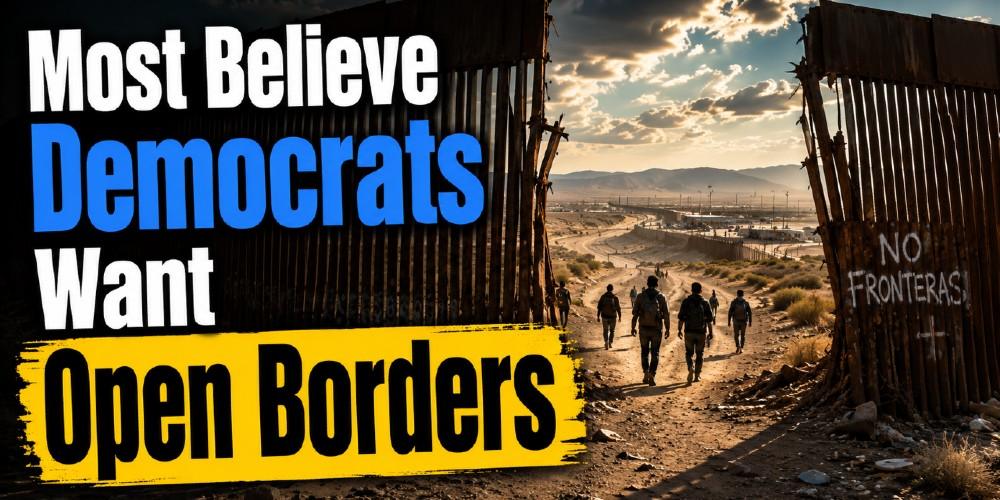

The Harvard-Harris survey makes a blunt point: a slim majority of Americans now view Democrats as favoring open borders, and that perception is tied to policies, enforcement choices, and real-world outcomes that have reshaped safety and resources across the country.
The poll, taken May 29-31 among 1,725 registered voters, cuts through the spin. Overall, 56 percent say Democrats support open borders while 44 percent disagree, and the split is sharp across party lines—most Republicans and a plurality of independents see the party as permissive on entry. Even within Democratic ranks the view is fractured, which tells you this is not a fringe belief but a mainstream concern.
That perception is rooted in a string of policy decisions and political stances that critics say prioritize ideology over enforcement. Practices such as catch-and-release, sanctuary policies, and repeated legal pushes against deterrent measures created the impression of leniency at the southern border. Groups tracking migration patterns estimate the illegal migrant population has surged to a level near 19 million, a figure many voters find alarming.
Public safety worries feature prominently in the results. Nearly half of respondents believe Democrats oppose deporting violent criminal illegal aliens, and that view is held by large majorities of Republicans and meaningful shares of independents. When citizens hear that enforcement priorities don’t include removing dangerous individuals, trust in leadership on this issue erodes quickly.
When Donald Trump took office, his administration moved to enforce existing laws more aggressively, focusing on detentions, removals, and measures meant to reduce the flow of unvetted arrivals. Those moves were framed as restoring order and protecting communities, and they resonated with voters tired of chaotic border scenes. House Republicans have repeatedly introduced legislation aimed at tightening control only to face unified resistance from Democrats in committee and on the floor.
House GOP leaders have voiced frustration at the consistent pattern of rejection for border-security measures, arguing the opposition amounts to a political choice against stronger enforcement. That dynamic—policy votes that appear to favor looser controls—feeds the public impression that rhetoric about compassion is sometimes covering up the consequences borne by everyday Americans. The optics of opposing funding for enforcement amplifies that point.
The human toll is hard to ignore for families who have suffered violent crimes linked to individuals who entered the country unlawfully. Border agents and local law enforcement find themselves in difficult positions, criticized when they act and blamed when they cannot do enough. This gulf between elite messaging and on-the-ground reality is a core reason the poll reflects public skepticism.
Conservative voters argue that a nation cannot be secure without enforceable borders, and they view discretion in immigration enforcement as a direct threat to community safety and national sovereignty. That position appeals to voters who want clear rules applied consistently rather than policy experiments with unpredictable outcomes. For many, upholding borders is a basic function of government that should not be subject to shifting political signals.
Democratic choices on sanctuary cities, public stands against certain enforcement tactics, and persistent calls for broad amnesty are cited by critics as evidence of the party’s priorities. To skeptical voters these positions look less like compassion and more like permissiveness with real costs to schools, hospitals, and local budgets. The poll acts as a mirror for those outcomes, reflecting how policy decisions play out in public perception as elections approach.
With the midterms looming, voters who feel the border crisis touches daily life are preparing to hold elected officials accountable at the ballot box. Expect immigration to remain a decisive issue where perceived priorities about enforcement and safety will shape choices. For Republicans, that means leaning into clear, enforceable proposals that contrast with what many voters see as a permissive alternative.




You must be logged in to post a comment Login