
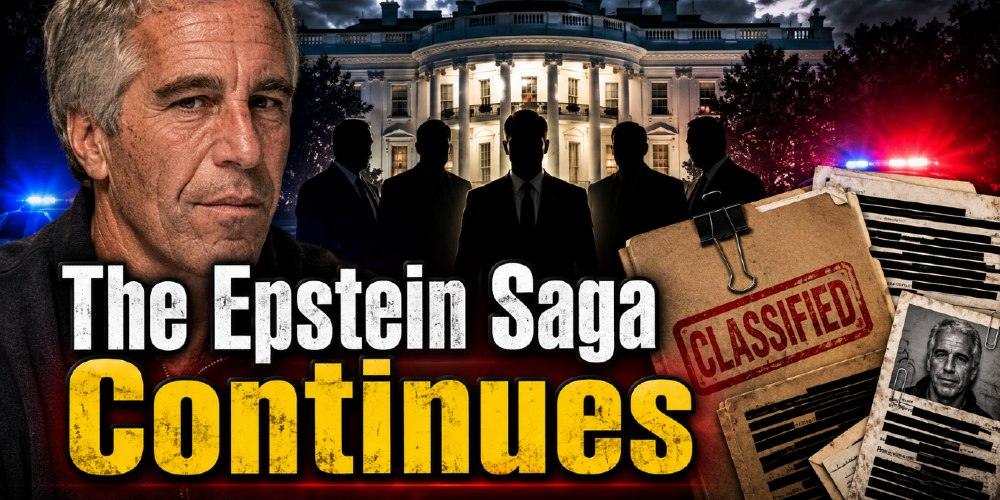

The Justice Department allowed a handful of members of Congress to read heavily redacted Jeffrey Epstein files in a secure room, and what they saw has split Republican instincts between demanding full exposure and protecting fragile institutions. This article lays out who looked, what was redacted, the likely inner circle handling the files, the plausible explanations for the cover-up, and why the kompromat hypothesis fits the behavior we’ve watched unfold. The stakes are clear: survivors deserve truth, but the people with access argue that an unfiltered release could cripple governments and intelligence operations. Conservatives who backed transparency now face the hard choice of insisting on disclosure or accepting a national security calculus they were elected to oppose.
On February 9, 2026, Representatives including Thomas Massie and Ro Khanna emerged from a DOJ reading room visibly shaken after reviewing material the public cannot yet see. Massie reported six men had been redacted, including at least one United States citizen and one he described as pretty high up in a foreign government.
Other members who reviewed the documents—Reps. Lauren Boebert, Nancy Mace, Marjorie Taylor Greene, Jamie Raskin, and Sheila Cherfilus-McCormick—also pressed for fewer redactions and more accountability.
The Epstein Files Transparency Act, signed in November 2025, was supposed to prevent redactions driven by embarrassment, reputational harm, or political sensitivity to officials or foreign dignitaries. Yet roughly half of the more than 6 million identified pages remain withheld under claimed privileges that the law’s authors say are not permitted. That gap between law and practice is what sent legislators into the reading room demanding answers instead of press conferences.
Within days of the reading-room showdown, the administration pivoted attention to UFO files, a move Massie labeled the ultimate weapon of mass distraction.
From a Republican point of view the pivot looks like politics: get the public looking at something else while an explosive file stays buried. Conservatives who yelped for transparency now have to reconcile their instincts with the behavior of officials inside the tent.
There are four plausible explanations for why the inner circle reversed course from releasing everything to suppressing large swaths. One is political self-protection for the president and allies. Another is legitimate prosecutorial secrecy. A third is donor and ally exposure that would wreck careers and administrations. The fourth is more complicated and more troubling: an intelligence-run kompromat architecture.
The kompromat theory fits the facts the others struggle to explain. If Epstein’s operation functioned as an intelligence instrument—gathering leverage across governments, media, the military, and finance—then releasing full records is not merely embarrassing. It is a map for adversaries to identify compromised people and reactive avenues. That kind of fallout would explain why figures like Kash Patel, Susie Wiles, Pam Bondi, Tulsi Gabbard, and John Ratcliffe might shift from demanding disclosure to managing containment.
We know operational sophistication existed. Ghislaine Maxwell’s family connection to Robert Maxwell, a man various historians describe as an intelligence conduit, has long invited scrutiny. Epstein’s wealth has never been credibly sourced to ordinary business deals. And the original reporting that an official told Alex Acosta Epstein belonged to intelligence
remains contested but relevant to how professionals inside government talk about this file.
Active prosecutions and grand jury secrecy legitimately cover some materials, but they do not justify the scale of redactions Massie and others saw, according to the law’s authors. Donor protection explains some inertia, but it does not explain loyalists abandoning a decade-long promise to expose corruption. The kompromat explanation is the only one that accounts for both legal restraint and operational cowardice.
Conservative skepticism toward institutions is being tested. If the inner ring truly believes some records must remain sealed to prevent systemic damage, then the people who ran on draining swamp-style transparency have effectively adopted the very logic they spent years condemning. That contradiction demands an explanation from the folks with the keys, not platitudes or distractions.
The survivors remain alive, the documents exist, and members of Congress who saw the files are angry and uncompromising. The question for Republicans who want both truth and stable institutions is how to get a defensible path to accountability that doesn’t hand a blueprint to hostile services. If the files disclose an intelligence-grade kompromat network, handling that truth without destroying fragile institutions is the central, ugly problem of our moment.




You must be logged in to post a comment Login