
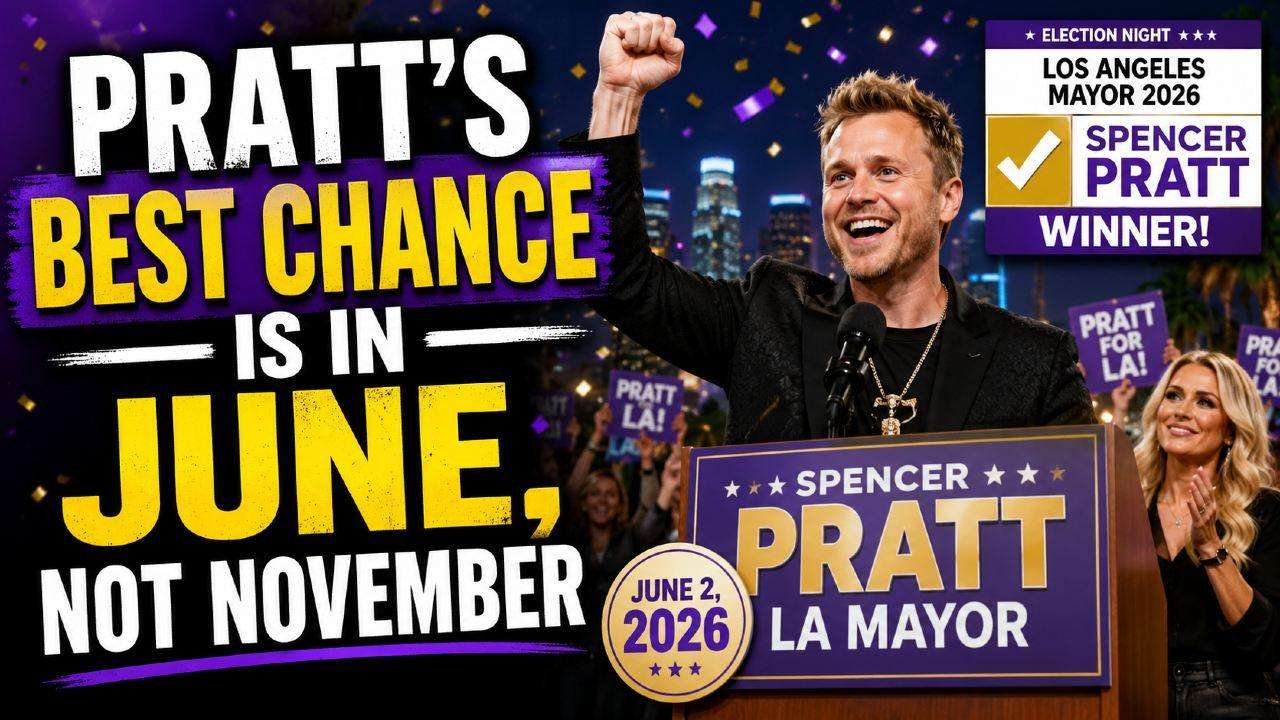

Spencer Pratt’s shock to Los Angeles politics isn’t a joke to ignore anymore. This piece breaks down how a debate moment, a fractured left, and a low-turnout primary could hand an outsider an opening no one in the establishment planned for. Read on for the numbers, the dynamics among Bass and Raman, and why June 2 matters more than many insiders admit.
The debate night changed expectations. What began as a celebrity candidacy turned into a moment that exposed fractures in the Democratic vote and forced traders and pundits to reassess odds. For Republicans watching, the math looks less fanciful and more feasible than the press wants to admit.
Polls matter and the polls right now are awkward for the incumbent. With Bass hovering in the mid-20s in some surveys and a huge chunk of voters undecided, momentum and perception can swing a lot with just one catalytic event. A well-timed attack line, or the image of a mayor who left town during a disaster, has a nasty way of shortening political careers.
Where Spencer helps himself is not by converting progressive Democrats but by benefiting from their division. Raman’s campaign appeals to the left flank, not to voters Pratt is targeting, and that dynamic erodes Bass’s base. In a crowded field, siphoning progressive votes away from the incumbent can create room for an outsider to advance.
Low turnout is the natural ally of insurgents. Primaries that pull a smaller, angrier electorate tend to reward simple, visceral messages: safety, property, and accountability. Pratt’s pitch—tougher on crime and homelessness, more decisive on fire risk—resonates with homeowners and older voters who actually show up in June.
Los Angeles’s 2022 primary turnout was weak, and 2026 looks set to be even less intense than a general election. That favors candidates who activate a narrow coalition instead of relying on broad Democratic infrastructure. When turnout is down, the loudest, most aggrieved voters decide the outcome, and that’s a much better terrain for an outsider.
The most dangerous thing for Bass may be that she and Raman are fighting like rival heirs instead of closing ranks. Their attacks on each other do more to weaken the incumbent’s standing with Democratic voters than to neutralize Pratt. Money and attention spent trading barbs is money not spent countering the outsider narrative.
Political elites keep forgetting history. Americans have twice elected unorthodox outsiders to the highest office and have repeatedly chosen nontraditional candidates for mayoral races in big cities. When the press treats a candidate as a circus act, it often underestimates latent voter contempt for the status quo.
If Pratt finishes second on June 2, the fall suddenly looks very different for Democrats. A November runoff would nationalize the race, and resources would flood in to stop a Republican from taking City Hall. That scenario favors the incumbent in a big way, because national money can overwhelm local grievances.
But June is not November, and the ballot doesn’t list party labels in the same prominent way. In the primary, the R next to a name is less damaging; voters decide on mood and competence rather than party loyalty. For a time-limited, furious electorate, the outsider’s brand can outperform pedigree.
There are real counterarguments to this scenario. Los Angeles has not picked a Republican mayor since 1993, and structural advantages still tilt toward Democrats. Pratt lacks governing experience, endorsements, and a conventional campaign structure, and those deficits keep his ceiling uncertain.
Yet conservative politics has long thrived on seizing windows of voter anger that insiders dismiss. The same pattern that lifted other outsiders applies here: an unpopular incumbent, a splintered opposition inside the dominant party, and a motivated minority willing to vote in a low-turnout contest. Those elements are present now.
To win outright in June, Pratt needs a few straightforward things: Bass under 35 percent, Raman holding enough left-leaning voters to stay competitive, and undecideds breaking against the incumbent at a scale consistent with anti-incumbent waves. None of that is exotic; it’s the arithmetic of upset politics, and it’s visible in the current landscape.
The broader lesson is simple and uncomfortable for the political class: dismissing outsiders can be dangerous when voters are fed up. Los Angeles faces visible failures on public safety and homelessness, and the optics of leadership during crises matter. On June 2, voters will decide whether incremental fixes are acceptable or whether they want to try something different, regardless of how pundits laugh today.
The stone which the builders rejected, the same is become the head of the corner: this is the Lord’s doing, and it is marvellous in our eyes.




You must be logged in to post a comment Login